

If your two-car garage doubles as a workshop, you know the cycle. Seasonal totes stack up by the wall, the workbench disappears under brackets and jigs, and your 3D printer waits to make the organizer hook or replacement knob you actually need. Upgrading that printer with the right nozzle can save you hours of reprints, which is why storage around two-car garage cabinets and a reliable hotend matter together.
This Micro Swiss nozzles review looks closely at the Microswiss FlowTech – CM2 Nozzle – Copper Body in .6mm. We evaluated the spec sheet and owner reports to explain what it does well, where it compromises, and which garage makers will get the most value from it in 2026.
This article contains affiliate links. If you buy through one of our links, TheGarageCrafted may earn a commission at no extra cost to you. Commissions never influence which products we recommend or how we rank them. Read our Affiliate Disclosure for details.

Prime Micro Swiss FlowTech CM2 Nozzle 0.6mm Copper Body


As an Amazon Associate we earn from qualifying purchases. Product prices and availability are accurate as of the date/time indicated.
What Stands Out
Copper Chromium Zirconium Body With Electroless Nickel Plating
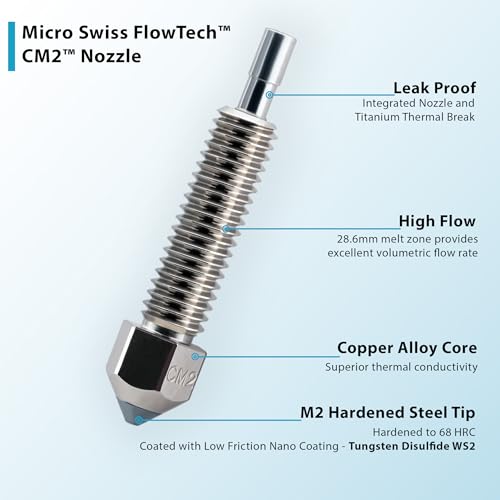
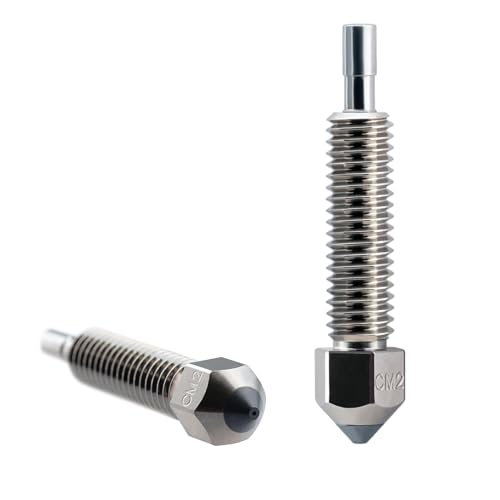
The core of this nozzle is made from high-temperature Copper Chromium Zirconium, not standard brass or plain copper. Microswiss states this special alloy retains strength at much higher temperatures compared with a regular copper alloy. The body is then plated with Electroless Nickel Plating for added protection and cleaner release.
For you, that means more stable heat transfer during long functional prints in a garage that swings from cool mornings to warm afternoons. Consistent melt helps with PETG, ASA, and nylon-style materials used for brackets, wall hooks, and automotive clips. You spend less time chasing temperature swings and more time printing usable parts.
M2 Hardened High Speed Steel Tip Rated at 68 HRC
The tip uses an M2 Hardened High Speed Steel insert that is heat-treated to 68 HRC. That hardness level is the reason owners commonly report much longer service life with abrasive filaments such as carbon fiber filled, glass filled, and glow blends. Where a soft brass orifice can widen and lose dimensional accuracy, this hardened insert holds its .6mm opening far longer.
The .6mm diameter itself is a smart middle ground for garage work. You get thicker extrusion lines, stronger walls, and quicker completion on large organizers and tool holders versus a .4mm. At the same time, you keep enough resolution for readable text, mounting holes, and snap fits when your slicer profile is dialed in.
WS2 Nonstick Nano Coating With 0.035 Friction Coefficient
Microswiss coats this CM2 tip with a nonstick nano WS2 layer and lists a coefficient of friction of 0.035. In practical terms, that slick surface resists plastic buildup on the tip face. PETG and other sticky materials are less likely to collect, char, and drag across your first layers.
In a dusty garage shop, that easy-release behavior helps a lot. You can wipe the nozzle clean with less scrubbing and keep going between jobs. Cleaner tips also support better bed adhesion checks and smoother top surfaces, which matters when you print visible storage accessories and custom dashboard mounts.
FlowTech Design and Made in USA Build Quality
This version is built for the FlowTech ecosystem, so seating, heat break contact, and filament path are designed as a matched system. Microswiss lists Made in USA manufacturing, which owners often associate with tighter quality control and consistent orifice sizing. You are buying a single precision component, not a bulk bag of variable spares.
If your goal is a one-and-done workhorse nozzle, that consistency helps. Pair it with tidy small parts storage for nozzles and tools so your .6mm stays protected and labeled. You will waste fewer calibration prints and keep your printer ready for the next bracket, spacer, or shop jig.
Where It Comes Up Short
A .6mm orifice trades fine detail for speed and strength. Small lettering, miniature figures, and ultra-fine 0.1mm features will look softer than the same model printed through a .25mm or .4mm tip. You will also need to update nozzle diameter, line width, layer height, and flow in your slicer, plus confirm that your printer already uses a FlowTech-compatible hotend.
Hardened steel plus copper still asks for thoughtful tuning. Owners commonly report raising melt temperature slightly and rechecking retraction and cooling when moving from brass, especially with PETG and ASA. This is a single premium nozzle, so you will still want separate cleaning needles, a brass brush, and dry filament storage to get the long life the materials promise.
Who Should Buy This
You should buy the Microswiss FlowTech – CM2 Nozzle – Copper Body if you run a garage print station for functional parts and want to stop swapping nozzles. Weekend DIYers, home mechanics, and whole-garage organizers who print tool holders, hose hooks, battery mounts, and carbon filled brackets will value the wear resistance and steady heat delivery. Keep your setup efficient alongside locking garage cabinets for filament and tools, and this .6mm can become your daily driver.
Who Should Skip It
This nozzle is not ideal for makers focused on highly detailed miniatures, lithophanes, or tiny 0.2mm text where a smaller orifice preserves sharpness. It is also not a good fit if your printer does not use the FlowTech system or if you prefer ultra-low-cost bulk packs for frequent experimental swaps. In those cases, choose a smaller size or a stock-compatible option instead.
Frequently Asked Questions
Can the .6mm CM2 handle carbon fiber and glass filled filament?
Yes, that is its core strength. The M2 hardened tip at 68 HRC is made for abrasive composites, while the copper alloy body supports stable high-temperature melting. For best results in 2026, dry your filament and use a hardened extruder drive.
Do you need to change slicer settings for a .6mm nozzle?
Yes, you should set the nozzle diameter to .6mm and adjust line width, layer height, wall count, and flow. Most users move to 0.3mm to 0.4mm layer heights for strong functional parts. Run a calibration cube and a retraction tuning print before starting large jobs.
How does the CM2 compare with plain brass for garage printing?
Brass heats well and costs less, but it wears quickly with filled filaments and needs more frequent replacement. The CM2 pairs a copper-based body for heat with a hardened tip and WS2 coating for life and cleanliness. To compare options, see our full picks in our 3D Printer Nozzles & Maintenance Parts guide.

Write Your Review
No reviews yet. Be the first to share your experience!