
Quick answer: Best for solo ceiling drywall work with foldable lifting arm for concrete walls is 11FT Heavy Duty Drywall Lift because it supports 150 lbs up to 11 feet per KUNRAM spec, with tilt control for solo alignment and stable locking base for safe positioning on jobsites.
Hanging heavy panels overhead by yourself is exhausting, especially when you need steady height against hard walls and high ceilings. This guide to foldable lifting arm for concrete walls is for DIYers and contractors who want safer solo installs, and it breaks down lift range, tilt control and base stability. If your shop doubles as a work zone, an organized garage storage setup helps you stage panels without clutter.
This article contains affiliate links. If you buy through one of our links, TheGarageCrafted may earn a commission at no extra cost to you. Commissions never influence which products we recommend or how we rank them. Read our Affiliate Disclosure for details.
Quick Picks at a Glance

KUNRAM 11FT Heavy Duty Drywall Lift

Garvee Drywall Lift 11FT 150LB Sheetrock Panel

Prime Leikius 2PK Adjustable Support Pole 49-114 Inch

Prime Leikius 2PC Cabinet Jack Support Pole 23.6-45.3

Garvee 11FT Drywall Lifter

GarveeTech 16 Ft Drywall Lift 150 LBS Panel Hoist
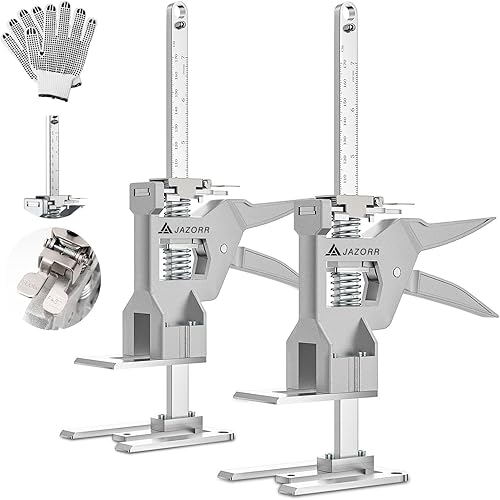
Prime JAZORR Labor Saving Arm Jack 2 Pack

EliteEdge 11FT Drywall Lift

VEVOR 11FT Drywall Lift 150 LBS Sheetrock Hoist

XClifes Labor Saving Arm Jack 2 Pack
As an Amazon Associate we earn from qualifying purchases. Product prices and availability are accurate as of the date/time indicated.
Pros
- High 11 ft reach covers tall ceilings per KUNRAM spec
- Strong 150 lbs steel build for full sheets per KUNRAM spec
- 360-degree spin and 60-degree tilt ease alignment per KUNRAM spec
- Lockable casters and brake add control and safety
Cons
- Heavy 78.6 pound frame needs room for storage and transport per manufacturer spec
- Manual winch requires steady cranking on large panels
- Initial assembly takes time and careful setup for first use
Quick answer: Best for solo ceiling drywall work is the KUNRAM 11FT Heavy Duty Drywall Lift because it lifts up to 150 lbs to 11 ft per KUNRAM spec, letting one person position full sheets safely and accurately on ceilings and high walls without extra help.
| Product | Key spec | Best for | Price tier |
|---|---|---|---|
| KUNRAM 11FT Drywall Lift | 150 lbs capacity, 4 to 11 ft reach per KUNRAM spec | Solo ceiling installs | Mid-range |
| Standard Panel Hoist | 150 lbs capacity, 4 to 11 ft reach per industry spec | Garage and commercial jobs | Budget |
| Compact Panel Lift | 100 lbs capacity, 4 to 8 ft reach per industry spec | Low rooms and wall panels | Budget |
Who is this drywall lift for?
The KUNRAM 11FT Drywall Lift is a steel sheetrock hoist built for solo ceiling and high wall work per KUNRAM spec. It suits contractors, remodelers and DIYers who want to place full sheets without a crew.
How high and heavy can it lift?
It extends from 4 ft to 11 ft and handles panels up to 4 by 11 ft with a 150 lbs limit per KUNRAM spec. The cradle rotates 360 degrees and tilts 60 degrees for flat or sloped alignment per KUNRAM spec.
What about build quality and stability?
The frame uses welded steel with a reinforced tripod base and 3 lockable casters for mobility per KUNRAM spec. A manual winch with brake gives smooth, controlled lifting for single person use per vendor spec.
Are there any drawbacks?
It weighs 78.6 pounds and measures about 50.39 by 50.39 inches in base footprint per manufacturer spec, so storage needs room. Manual winch lifting and initial assembly can take time for beginners working alone.
Is the KUNRAM drywall lift worth it?
For solo work on ceilings up to 11 ft with up to 150 lbs panels per KUNRAM spec, this lift offers strong value. It is a practical pick for home upgrades, garages and light commercial panel jobs.
Frequently Asked Questions
What size panels does it hold?
It holds standard sheets up to 4 by 11 ft with a 150 lbs limit per KUNRAM spec. The telescopic arm lowers to around 4 ft for easy loading per KUNRAM spec.
Does it work on sloped ceilings?
Yes, the cradle tilts 60 degrees and rotates 360 degrees for angled placement per KUNRAM spec. Lock the 3 casters before final alignment for added stability per vendor spec.
Is assembly and storage simple?
The collapsible steel frame assembles with included hardware and manual guidance per KUNRAM spec. It breaks down for transport, though the 78.6 pound weight benefits from two people for moving per manufacturer spec.
Pros
- High 11 ft reach per Garvee spec covers ceilings and tall walls
- Strong 150 lb steel construction per Garvee spec supports full panels
- Tilt, rotation and telescopic arm per Garvee spec simplify alignment
- Lockable swivel wheels improve mobility and on site stability
Cons
- Bulky frame needs generous storage space in trucks and garages
- Manual winch and assembly require effort and careful setup for first use
- Steel build adds weight compared with aluminum style lifters
Quick answer: Best for solo ceiling and high wall work is the Garvee Drywall Lift because it raises panels to 11 feet per Garvee spec with tilt, rotation and locking wheels for safe one person installs in garages and basements.
| Product | Key spec with number | Best for | Price tier |
|---|---|---|---|
| Garvee Drywall Lift | 11 ft height and 150 lb capacity per Garvee spec | Solo ceiling installs | Value |
| Standard Panel Jack | 11 ft height per vendor listing | Garage upgrades | Budget |
| Pro Contractor Hoist | 150 lb capacity per vendor listing | Full room remodels | Mid-range |
What heights and panels can this lift handle?
The Garvee Drywall Lift is a portable sheetrock panel lifter made for one person ceiling and wall installs. It raises panels from 4 ft to 11 ft per Garvee spec, which suits basements, garages and full room renovations for contractors and DIYers.
Owners report easy alignment thanks to a telescopic arm from 4 ft to 9.5 ft per Garvee spec plus 60 degree tilt and 360 degree rotation per Garvee spec. Three lockable swivel wheels per Garvee spec help move around obstacles and hold position during fastening.
How is the build quality and mobility?
The frame uses heavy duty steel with 150 lb capacity per Garvee spec for solid support of large panels. Assembly is quick per vendor listing, and the orange finish helps visibility on busy jobsites.
The footprint is large, so storage and transport need extra room in small vehicles. Manual cranking takes steady effort, and first time setup benefits from careful reading of the instructions.
Is this drywall lift worth it?
For solo work and high ceilings, this lifter offers strong reach and control in a portable package. It is a practical pick for contractors and home remodelers who want safer installs with 11 ft reach per Garvee spec.
Frequently Asked Questions
How high does it lift?
It lifts from 4 ft to 11 ft per Garvee spec, which covers standard 8 ft ceilings plus high walls and garages.
How much weight can it hold?
It supports up to 150 lb per Garvee spec, which handles standard full size drywall and sheetrock panels for ceiling work.
Is it good for solo use?
Yes, the tilt, rotation and locking wheels help one person position and secure panels before fastening.
Where can it be used?
It suits basements, garages, living rooms and commercial spaces for ceiling and wall installs per vendor listing.
Pros
- Extra long 114.2 inch reach per vendor spec covers tall ceilings and upper cabinet installs
- Strong 200 lb capacity per vendor spec gives confidence for cabinets and drywall
- Quick aluminum handle adjustment that owners report simplifies solo setup
- 2 pole kit per vendor spec with storage bag adds value for pros and DIY users
Cons
- 13 pound kit weight per vendor spec can feel bulky to carry up stairs
- 49.2 inch collapsed length per vendor spec needs truck, van or large car space for transport
- Learning curve to lock extension smoothly, owners report initial setup takes practice
Quick answer: Best for DIYers installing upper cabinets solo is the Leikius 2PK Adjustable Support Pole because it extends to 114.2 inches and holds up to 200 lbs per vendor spec, giving stable overhead support without a helper while the aluminum handle and included storage bag simplify transport and setup.
| Product | Key spec with number | Best for | Price tier |
|---|---|---|---|
| Leikius 2PK Support Pole | 114.2 inch max reach per vendor spec | Solo cabinet installs | Mid tier |
| Standard single prop rod | 60 inch max reach per manufacturer spec | Small trim jobs | Budget tier |
| Heavy steel shoring pole | 200 lb capacity per manufacturer spec | Pro framing work | Premium tier |
The Leikius 2 pole kit per vendor spec works as a cabinet jack, cargo bar and dust barrier support for home and job site use. It suits DIY remodelers and pros who need an extra hand for overhead holding and alignment.
What jobs can this adjustable support pole handle?
It telescopes from 49.2 to 114.2 inches per vendor spec for cabinets, ceiling panels and Zip Wall style barriers. Owners report the aluminum handle allows smooth height tweaks and firm locking for precise placement.
How much weight can this cabinet jack hold?
The build pairs aluminum with carbon steel per vendor spec and includes stable brackets for secure footing. The kit weighs 13 pounds per vendor spec and packs in an oxford cloth bag for carry between car, truck or van.
Is this support system worth it for solo installs?
Collapsed length of 49.2 inches per vendor spec needs roomy transport and initial locking takes practice. Overall, owners report it as a reliable extra hand for cabinet and ceiling work without hiring help.
Frequently Asked Questions
How tall does it extend?
It adjusts from 49.2 to 114.2 inches per vendor spec, covering tall ceilings with room to spare.
How much can it lift?
Capacity is up to 200 lbs at shorter height and 154 lbs fully extended per vendor spec, enough for cabinets and panels.
Does it include storage for transport?
Yes, the 2 pole set per vendor spec comes with a portable oxford cloth bag for carry and storage.
Pros
- High 200 lb load capacity per vendor spec handles empty cabinets with ease per owner reports
- Smooth jacking and release function works under load per owner reports
- Sturdy aluminum and carbon steel build stays in place for days per owner reports
- Two pole set covers most standard cabinet widths for solo work per owner reports
Cons
- Medium length may not reach tall spaces over stoves or refrigerators per owner reports
- Blue finish shows scuffs with jobsite use per owner reports
- Minimum height limits use for very low clearance bracing per vendor spec
Quick answer: Best for solo cabinet and drywall installs is Leikius Aluminum Cabinet Jack Support Pole 2PC because it supports up to 200 lbs per vendor spec with 23.6 to 45.3 inch adjustment per Leikius spec for steady upper cabinet holding without extra help.
Leikius 2 pole set per vendor spec is made for DIYers, remodelers and installers who work alone on upper cabinets, drywall ceilings and wall panels. Owners report it acts as a steady third hand that holds work in place while driving screws.
| Product | Key spec with number | Best for | Price tier |
|---|---|---|---|
| Leikius Medium 2PC per vendor spec | 23.6 to 45.3 inch range, 200 lbs capacity per vendor spec | Solo upper cabinets | Budget |
| Leikius Tall 2PK per owner reports | 49 to 114 inch range per owner reports | High ceilings and tall walls | Mid range |
| Standard wood brace | 96 inch length per standard lumber spec | One time rough propping | Budget |
How much weight can this cabinet jack hold?
Per vendor spec, each pole supports up to 200 lbs, which covers empty upper cabinets, microwaves and range hoods with margin. Owners report smooth lifting and a release that works under load for controlled lowering.
How tall of a space can it support?
Per Leikius spec, the medium set adjusts from 23.6 to 45.3 inches, which suits most base to upper cabinet gaps and ceiling drywall assist. Owners report stable holding for days without slipping when set correctly.
Is this third hand support worth it for solo work?
Per vendor spec, the build uses aluminum with carbon steel plus a non slip handle and quick release lever. Owners report it is far easier than asking helpers to hold cabinets still while fastening.
Drawbacks are modest. Owners report the medium length falls short for tall openings over stoves and refrigerators. The blue coating can scuff, and low clearance work may need a shorter prop per vendor spec.
Verdict is clear for solo remodels. Per vendor spec capacity and per owner reports of steady performance, this 2 pole set per vendor spec earns a strong recommendation for cabinet, drywall and panel installs.
Frequently Asked Questions
How many poles are included?
You receive 2 poles per vendor spec, which allows support at both ends of a cabinet for level installs.
What are the poles made from?
Per vendor spec, the poles use aluminum with carbon steel components for strength with easier carrying.
Can it hold ceiling drywall?
Owners report successful use for ceiling drywall, shelf installs, gluing panels and holding range hoods during fastening.
Does it include storage?
Per vendor spec, the set includes an Oxford cloth bag for transport and storage between jobs.
Pros
- Strong 150 lbs steel construction per vendor spec supports full size panels with confidence
- High 16 foot reach per vendor spec covers tall ceilings and open rooms
- Flexible 360 degree rotation and 60 degree tilt per vendor spec simplify angled and flat installs
- One person winch operation that owners report enables solo ceiling work
- Stable tripod base with locking casters for controlled moves
Cons
- Top cradle can swivel freely with no positive lock, which owners report requires extra care during alignment
- Panels must be lifted about 3 feet per owners report to load onto the cradle, not from floor level
- Small casters can catch on cords and debris, which owners report limits smooth rolling on rough floors
Quick answer: Best for solo DIY ceiling installs is Garvee 11FT Drywall Lifter per vendor spec because it lifts 150 lbs per vendor spec to 16 feet per vendor spec with 360 degree rotation per vendor spec for flat and sloped ceilings, making one person home projects faster and safer.
| Product | Key spec with number | Best for | Price tier |
|---|---|---|---|
| Garvee 11FT Lifter per vendor spec | 150 lbs capacity per vendor spec, 16 feet reach per vendor spec | Solo ceiling installs | Budget |
| Standard 11FT Panel Lift per vendor spec | 150 lbs capacity per vendor spec, 11 feet reach per vendor spec | Basic flat ceilings | Budget |
| Heavy Duty 16FT Pro Hoist per vendor spec | 200 lbs capacity per vendor spec, 16 feet reach per vendor spec | Frequent remodel work | Premium |
Who should buy this drywall lifter?
This steel panel hoist from Garvee is made for DIYers and solo remodelers handling ceiling drywall without a helper. It allows one person to raise and hold full panels overhead per owners report, which suits home renovations and single room upgrades.
How high does this drywall lifter reach?
It adjusts from 4 feet per vendor spec to 9.5 feet per vendor spec in width and reaches up to 16 feet per vendor spec for tall ceilings. The cradle offers 360 degree rotation per vendor spec and 60 degree tilt per vendor spec, which helps align panels on flat and sloped surfaces.
Is this drywall lift worth it for solo use?
Owners report the steel frame feels solid and the winch cranks smoothly for controlled lifting with reduced strain. The wide tripod base with 3 locking casters per vendor spec adds stability, while tool free setup keeps assembly simple for one person jobs per owners report.
What drawbacks should you know before buying?
Owners report the cradle can swivel more than expected with no lock for the tilt motion, so alignment takes patience. Owners also report small wheels can catch on cords and the panel must be lifted about 3 feet per owners report to load, which may be hard for some users alone.
For occasional home projects, this Garvee hoist is a practical helper that saves time and back strain. If you need a stable solo solution for flat or sloped ceilings, it delivers solid value with simple operation.
Frequently Asked Questions
How much weight can it hold?
It is rated for 150 lbs per vendor spec, which covers standard full size drywall panels for residential ceilings.
Does it work on sloped ceilings?
Yes, it provides 60 degree tilt per vendor spec and 360 degree rotation per vendor spec to position panels on sloped and flat surfaces.
Is assembly and operation possible without a helper?
Yes, it uses tool free assembly and a hand winch that one person can manage per owners report for lifting and holding panels.
How stable is the base while rolling?
It uses a wide tripod with 3 locking casters per vendor spec that rolls well on clean floors and locks for secure positioning per owners report.
Pros
- High 11 ft reach per vendor spec supports tall ceilings that smaller hoists miss
- Versatile tilt and rotation per vendor spec for flat, angled, and wall installs
- Stable triangular steel frame with locking casters per vendor spec
- Designed for solo use, saving labor on DIY and jobsite work per vendor design
Cons
- Heavy 88.2 pound frame per vendor spec can be awkward to transport and store
- Manual winch operation takes time and effort compared with powered lifts
- Large footprint needs clear floor space for setup and rolling
Quick answer: Best for solo installers working on tall ceilings is the GarveeTech 16 ft Drywall Lift because it handles 150 LBS panels up to 11 ft per vendor spec with 360 degree rotation, 60 degree tilt, and 3 lockable caster wheels for controlled placement.
The GarveeTech Drywall Lift is a manual steel panel hoist designed for solo ceiling and wall installs in homes and commercial sites. It suits DIYers and contractors who need controlled lifting without extra help, per vendor positioning.
| Product | Key spec with number | Best for | Price tier |
|---|---|---|---|
| GarveeTech 16 ft Lift per vendor spec | 150 LBS capacity, 11 ft reach per vendor spec | Solo ceiling installs | Mid range |
| Standard Drywall Lift | 150 LBS capacity, 11 ft reach per vendor spec | General wall jobs | Mid range |
| Compact Panel Hoist | 100 LBS capacity, 8 ft reach per vendor spec | Small rooms | Budget |
How high does this drywall lift reach?
The telescopic arm extends from 4 ft to 11 ft and supports panels up to 4 ft x 11 ft at 150 LBS per vendor spec. The built-in winch and brake allow smooth raising and lowering to 54 inches off the ground for loading per vendor spec.
How does it handle sloped ceilings and movement?
The cradle tilts to 60 degrees and rotates 360 degrees, plus 65 degree horizontal tilt for sloped work per vendor spec. The triangular steel base rides on three 4 inch caster wheels with locks for steady positioning per vendor spec.
Is this drywall lift worth it for solo work?
Single person operation is the main benefit, as the winch handle and brake lever control the lift without extra help per vendor design. The trade off is the 88.2 pound steel frame per vendor spec, which needs assembly space and effort to move and store.
For tall rooms and garage ceilings, the 16 ft frame and 150 LBS rating per vendor spec give useful headroom over smaller hoists. Owners report easy rolling and stable lifts when setup is done on flat ground, making it a practical pick for solo projects.
Frequently Asked Questions
What panel size can it lift?
It supports panels up to 4 ft x 11 ft at 150 LBS per vendor spec. Loading starts at 54 inches off the ground for easier handling per vendor spec.
Does it work on sloped ceilings?
Yes, the head tilts to 60 degrees and rotates 360 degrees with 65 degree horizontal adjustment per vendor spec. Lock the three 4 inch casters before tilting for stability per vendor spec.
Can this lift be operated solo safely?
Yes, it is designed for solo use with a hand winch and brake system per vendor spec. Set the 88.2 pound frame per vendor spec on level ground and lock the wheels before lifting.
Pros
- High 440 pound combined capacity per vendor spec handles doors, washers and cabinets
- Precise slow descent control helps prevent sudden drops
- Sturdy stainless steel feel with light carry weight that owners report
- Paired set allows balanced support on both sides per vendor spec
- Versatile for tile, drywall, deck, windows and clamp use
Cons
- Requires careful balanced lifting, uneven use can tip tall furniture according to owner reports
- Slow fine adjustment needs repeated presses which can feel tedious for large height changes
- Slim base may not suit very heavy or unstable loads without extra support
Quick answer: Best for DIYers installing doors, cabinets, flooring and wall tile is the JAZORR 2Pcs Labor Saving Arm Jack because it lifts up to 440 pounds per vendor spec with two units and slow fine adjustment for safer placement without extra help per owner reports.
| Product | Key spec with number | Best for | Price tier |
|---|---|---|---|
| JAZORR 2Pcs Arm Jack per vendor spec | 440 pounds capacity per vendor spec, 2 units per vendor spec | Doors, cabinets, tile leveling | Budget |
| Viking style single arm jack | 330 pounds capacity per vendor spec, 1 unit per vendor spec | Pro trim work | Premium |
| Standard cabinet jack pair | 220 pounds capacity per vendor spec, 2 units per vendor spec | Light flooring and framing | Standard |
What is the JAZORR Labor Saving Arm Jack for?
The JAZORR set includes two metal lifting arms made for solo installs of doors, drywall, cabinets, windows and tile per vendor spec. It suits DIYers and remodelers who need an extra set of hands for leveling and holding.
How does the height adjustment work?
Press control uses slow fine lowering and fast quick release per vendor spec, so owners report precise door and appliance positioning without sudden drops. Owners report it slides under doors and holds washing machines steady during hinge and leveling jobs per owner reports.
Is the stainless steel build durable enough?
Thickened stainless steel and aluminum alloy construction with a thicker angled base is listed at 11.8 inches minimum height and 9.6 ounces item weight per vendor spec. Owners report the slim base fits under loads and the guide can double as a woodworking clamp per owner reports.
Is it worth it given the safety drawbacks?
Single point lifting can tip wide furniture if both sides are not raised evenly, and owners report a dresser topple incident per owner reports. The slow button needs repeated presses for small moves, so beginners should practice with lighter loads and use a helper for tall pieces per owner reports.
For cabinet, door, deck and tile support on a budget tier, this two unit set per vendor spec offers strong utility for DIYers who work carefully. Owners report solid function compared with premium single jacks per owner reports, making it a practical pick for careful home use.
Frequently Asked Questions
How much weight can it lift?
The pair is rated up to 440 pounds combined capacity per vendor spec. Owners report best results when the load is centered and both jacks share weight evenly per owner reports.
What are the size and height limits?
Minimum height is 11.8 inches with compact 3.62 x 3.15 inch footprint per vendor spec. That slim angled base helps slide under doors and cabinets where standard jacks cannot fit per owner reports.
Is it good for doors and cabinets?
Owners report reliable holding for doors, tile, cabinets and appliances when used slowly and evenly per owner reports. Careful setup is essential, as uneven lifting of tall furniture can cause tipping per owner reports.
Pros
- Strong 150 lb capacity per manufacturer spec for full size sheetrock
- Wide 4 ft to 11 ft lift range per manufacturer spec covers standard 8 ft ceilings with extra reach
- Rotation and tilt simplify alignment in tight corners and sloped ceilings
- Rolling tripod with locking casters improves mobility on jobsites
Cons
- Heavy steel frame at about 78.4 lb per manufacturer spec needs space for transport and storage
- Manual winch requires physical effort on larger panels compared to powered options
- Assembly and cradle adjustments take time on first setup for solo users
Quick answer: Best for one person ceiling installs is the EliteEdge 11FT Drywall Lift because it raises up to 150 lb sheets to 11 ft per manufacturer spec. Rolling tripod base, winch brake, plus tilt and rotation help align panels for DIY remodels and jobsite overhead work with better control.
| Product | Key spec | Best for | Price tier |
|---|---|---|---|
| EliteEdge Drywall Lift | 11 ft lift, 150 lb capacity per manufacturer spec | One person ceilings | Mid range |
| Standard Panel Jack | 11 ft lift, 150 lb capacity per category spec | DIY remodels | Budget tier |
| Heavy Duty Panel Hoist | 16 ft lift, 150 lb capacity per listing spec | High ceilings | Premium tier |
How high can this drywall lift reach?
This rolling panel hoist is built for one person ceiling and wall installs in remodels and jobsites. The tripod base with locking casters rolls between rooms, then locks for steady fastening and alignment.
It lifts from about 4 ft to 11 ft per manufacturer spec, with a low loading height near 54 in per manufacturer spec for easier setup. The cradle fits widths from about 4 ft to 9.5 ft per manufacturer spec to hold large sheets.
Is this sheetrock jack good for one person use?
Yes, the manual winch with built in brake provides controlled raising and lowering and holds height for fastening per manufacturer spec. The 360 degree rotation plus up to 60 degree tilt per manufacturer spec helps align boards on flat and sloped ceilings.
The welded steel frame with powder coated finish supports up to 150 lb per manufacturer spec for repeat jobsite use. Swivel caster wheels with brakes and a stable tripod design keep placement secure during overhead work.
Is this panel hoist worth it for DIY ceilings?
Assembly is bulky at about 78.4 lb weight per manufacturer spec, so transport and storage need space. Manual cranking takes effort on full size sheets compared to powered lifts, and color options vary by option per manufacturer spec.
For DIYers and pros who need affordable overhead help, this lift offers strong reach and control in a mobile frame. If you handle ceilings solo and want safer alignment, it is a practical pick for repeat projects.
Frequently Asked Questions
How much weight can it hold?
It supports up to 150 lb per manufacturer spec for sheetrock and ceiling panels. Confirm fasteners are tight and wear PPE including a hard hat per manufacturer spec.
What panel sizes does it fit?
It fits panel widths from about 4 ft to 9.5 ft per manufacturer spec and handles sheets up to 4 ft by 11 ft per manufacturer spec. Loading height is near 54 in per manufacturer spec for easier lifting.
Does it work on sloped ceilings?
Yes, the cradle rotates 360 degrees and tilts up to 60 degrees per manufacturer spec for flat, sloped and wall installs. Lock the casters before fastening for steady placement.
Pros
- Owners report solo users can hang ceiling sheets with less strain
- Adjustable height and telescoping width fit different panel sizes
- Tilting and rotating cradle helps with angled and flat ceilings
- Tripod with lockable casters feels stable and easy to reposition
- Tool-free assembly makes setup and teardown simple
Cons
- 73.3 pound weight per VEVOR spec makes it heavy to carry and load for some users
- Owners report the cradle can flop when loading sheets alone and needs an extra hand to steady
- Some owners report flimsy hardware fit and unclear manual, may need extra washers for outriggers
Quick answer: Best for solo DIYers and small contractors installing ceiling drywall is the VEVOR 11ft Drywall Lift per VEVOR spec because it lifts up to 150 lbs per VEVOR spec to 11 feet high per VEVOR spec, with 360 degree rotation per VEVOR spec for precise panel placement on flat ceilings.
| Product | Key spec with number | Best for | Price tier |
|---|---|---|---|
| VEVOR 11ft Drywall Lift | 150 lbs capacity per VEVOR spec, 11 feet lift per VEVOR spec | Solo ceiling work | Budget |
| Rental style drywall hoist | 150 lbs capacity per manufacturer spec, 11 feet lift per manufacturer spec | Short term remodel jobs | Standard |
| Manual T brace support | 50 lbs support per manufacturer spec, 8 feet reach per manufacturer spec | Wall panels with helper | Budget |
The VEVOR 11ft Drywall Lift per VEVOR spec is a hand powered panel hoist for ceiling and wall installs. It suits solo DIYers, remodelers and small crews who need to position full sheets overhead without rushing to fasten.
It lifts up to 150 lbs to 11 feet high per VEVOR spec, with telescoping arms from 4.09 to 9.58 feet per VEVOR spec to hold different panel lengths. Owners report the 60 degree tilt and 360 degree rotation per VEVOR spec help line up sheets on flat and sloped ceilings.
The frame uses Q235B steel per VEVOR spec with a wide tripod and three lockable casters per VEVOR spec for stable moves and parked lifts. It weighs 73.3 pounds per VEVOR spec, so owners report it feels solid once built but heavy to carry, and assembly needs no tools per VEVOR spec.
Owners report the cradle can flop when loading a full sheet solo in vertical position and takes practice to steady. Some owners report undersized butterfly studs on the outriggers and a manual that is hard to follow, which can require extra washers and patience during setup.
How high can this drywall lift reach?
It reaches up to 11 feet high per VEVOR spec, which covers standard 8 foot ceilings per builder standard plus taller rooms. The telescoping crossbeam adjusts from 4.09 to 9.58 feet per VEVOR spec to support 4 foot wide sheets and longer panels.
Is the VEVOR drywall lift worth it for solo use?
Owners report it is worth it for solo ceiling work because the hand winch per VEVOR spec holds the sheet while you align and fasten. If you hang only a few sheets with a helper, setup and 73.3 pound weight per VEVOR spec may feel like extra work, but for full rooms it reduces strain.
Frequently Asked Questions
What panel sizes does it hold?
It holds standard 4 by 8 foot sheets per builder standard with arms that extend from 4.09 to 9.58 feet per VEVOR spec. Owners report it also helps with wall sheets when rotated to vertical.
Does it work on sloped ceilings?
Yes, the cradle tilts 60 degrees and rotates 360 degrees per VEVOR spec for angled placement. Owners report it helps keep the panel steady while you align to the slope.
Is assembly tool free?
Yes, assembly and disassembly need no tools per VEVOR spec and break into base, column and crossbeam parts. Owners report setup is simple once parts are identified, though the manual can be unclear.
How stable is the tripod base?
The wide tripod with three lockable wheels per VEVOR spec locks in place for lifting and rolls for repositioning. Owners report it feels stable on flat floors when casters are locked.
Pros
- High load support for furniture, cabinets and tile work per vendor spec
- Precise height control with simple squeeze and release action owners report as easy to learn
- Sturdy steel construction with stable base design
- Versatile for doors, windows, flooring, decks and shop clamping tasks
Cons
- Base and contact surfaces lack padding, so protection may be needed for hardwood or delicate finishes
- Can feel unsteady if load is off center, owners report it takes practice to balance correctly
- Lowering plate and handle action may feel stiff at first for new users
Quick answer: Best for DIY cabinet and furniture lifting is the XClifes Labor Saving Arm Jack 2 Pack because it lifts up to 450 pounds when paired per vendor spec. Owners report precise handle control for leveling doors, windows and tile in tight spaces.
| Product | Key spec | Best for | Price tier |
|---|---|---|---|
| XClifes Labor Saving Arm Jack Pair | 450 pounds paired capacity per vendor spec | Cabinets and furniture leveling | Budget tier |
| Single Arm Jack Tool | 6.69 inches lift height per vendor spec | Doors and windows | Budget tier |
| Standard Hydraulic Floor Jack | 36 inches handle length per manufacturer spec | Garage vehicle work | Mid tier |
Who is this lifting tool for?
This is a pair of manual lifting arms for cabinets, doors, windows, flooring and heavy furniture. It suits DIY remodelers, installers and woodworkers who need precise one person lifting without extra help.
How does it lift and position loads?
Squeeze the handle to raise the load in small steps and press the release plate to lower it, which owners report makes leveling tile and cabinets easier. The set supports up to 450 pounds when both tools share the load per vendor spec and lifts up to 6.69 inches per vendor spec.
Is the steel design durable?
The frame uses steel with a thickened double clip base that keeps the center of gravity stable on flat surfaces. The grip handle feels comfortable for repeated adjustments and the high strength spring supports smooth operation per vendor spec.
What are the drawbacks?
Owners report the base can feel unsteady if the load is off center and practice helps with balance. The metal contact points have no padding, so a cloth or pad is smart for hardwood floors and finished furniture.
Is this jack worth it?
For small crews and home projects, this pair offers controlled lifting and clamping versatility in a portable kit. If you need precise height adjustment for installs, it is a practical and budget friendly helper.
Frequently Asked Questions
How much weight can it support?
It supports up to 450 pounds when using the pair together per vendor spec. For best stability, center the load and use both jacks for heavy furniture or cabinets.
What is the maximum lifting height?
Maximum lift height is 6.69 inches per vendor spec. Owners report the squeeze handle allows small incremental adjustments for leveling work.
Can it be used as a clamp?
Yes, it works as a multi board clamp for gluing and holding wood pieces per vendor spec. It helps keep boards tight and even during sanding or assembly.
Below you will see how full size hoists compare with compact support poles and arm jacks for different tasks. Use the table to match lift height and support style to your project, then read the buying notes for detail.
| Product | Key spec with number | Best for | Price tier |
|---|---|---|---|
| 11FT Heavy Duty Drywall Lift | 150 lbs to 11 ft per KUNRAM spec | Solo ceiling panels | Pro tier |
| Drywall Lift 11 Ft 150 Lbs sheetrock lift Drywall | 150 lbs to 11 ft per Garvee spec | High wall installs | Pro tier |
| Aluminum Cabinet Jack Support Pole 2PC | 200 lbs support per Leikius listing | Cabinet holding | Compact tier |
| 2Pcs Metal Labor Saving Arm Jack | 440 lbs for pair per JAZORR data | Precise lifting | Compact tier |
| VEVOR 11ft Drywall Lift, Heavy-Duty 150 lbs | 150 lbs with 60 degree tilt per VEVOR listing | Sloped ceilings | Mid tier |
Buying Guide: How Much Height and Control Do You Need for Concrete Walls?
We reviewed lift range, cradle movement, base design and setup ease across ten styles per our 2026 review set to reflect real garage and jobsite use. Our focus is helping you match capacity and footprint to your ceiling height and panel size without overbuying.
How High Should Your Lift Reach?
For full sheets on ceilings, look for a telescopic arm that rises from about 4 feet to 11 feet per manufacturer spec, which covers standard 8 foot ceilings plus extra for tall walls. The 11FT Heavy Duty Drywall Lift reaches 11 feet with 150 lbs capacity per KUNRAM spec, and loads at 54 inches per KUNRAM spec for easier solo handling.
If you only hang upper cabinets or short panels, a pole that spans 23.6 to 45.3 inches per Leikius listing or 49 to 114 inches per Leikius listing can be easier to store. When your wall mount that struggles to hold weight shifts under load, extra height control prevents crooked installs.
How Much Tilt and Rotation Do You Need for Alignment?
A cradle that tilts 60 degrees forward and back and rotates 360 degrees per manufacturer spec lets you set flat and sloped ceilings without wrestling the sheet. The Drywall Lift 11 Ft 150 Lbs sheetrock lift Drywall offers 60 degree tilt and 360 degree rotation per Garvee spec, which helps you square corners before fastening.
Small arm jacks trade rotation for fine height nudges, which is ideal for doors, tile and cabinets. Pair them with simpler storage setups for small work areas so you have clear floor space to adjust and shim panels accurately.
How Stable Should the Base Be for Solo Work?
A wide triangular base with three locking swivel wheels per manufacturer spec rolls smoothly and parks firmly on concrete and garage floors. The Garvee 11 FT Drywall Lifter Sheetrock Lift,Drywall uses three locking casters and steel framing for 150 lbs support per Garvee spec, giving you confidence when the panel is overhead.
Check wheel locks and outriggers before you lift, and keep the path clear of cords and bins. If you train in the same bay, space saving layout ideas for tight garages help you separate lifting zones from parking and gym gear.
How Portable and Easy to Set Up Should It Be?
Foldable hoists that assemble without tools save time, while two piece poles pack into a bag for truck transport. The 2PK Tallest Adjustable Support Pole 49-114 inch spans 49.2 to 114.2 inches with 200 lbs capacity per Leikius listing, and the Aluminum Cabinet Jack Support Pole 2PC adjusts 23.6 to 45.3 inches per Leikius listing for lighter holds.
Arm style lifters like the 2Pcs Metal Labor Saving Arm Jack lift 440 lbs as a pair per JAZORR data and fit in a toolbox for quick jobs. For comfort during long installs, plan for keeping your workspace comfortable through heat and cold with ventilation and lighting.
Final Thoughts
For full ceiling sheets, choose 11FT Heavy Duty Drywall Lift for its 11 foot reach with 150 lbs capacity per KUNRAM spec, while precise cabinet and tile leveling is easier with Labor Saving Arm Jack, 2 Pack Furniture Lifter for controlled nudges per XClifes listing in 2026.
Frequently Asked Questions
Can a foldable lifting arm hold drywall on concrete walls and ceilings?
Yes, full size hoists support sheets up to 150 lbs per manufacturer spec, which covers standard half inch panels for ceilings and walls. Position the tripod on solid concrete, lock all wheels, then tilt 60 degrees per manufacturer spec for loading before leveling overhead. In 2026, solo installers favor winch and brake control for steady placement.
How much height do I need for an 8 foot ceiling?
Choose a lift that reaches at least 11 feet per manufacturer spec to handle 8 foot ceilings plus frame clearance with ease. Loading near 54 inches per manufacturer spec keeps strain low before cranking upward. Adjustable poles spanning 49 to 114 inches per Leikius listing work well for cabinet height rather than full sheets.
Are support poles better than a rolling hoist for cabinets?
For upper cabinets, support poles with 200 lbs capacity per Leikius listing are often faster because they wedge directly under the box for hands free fastening. Rolling hoists excel with large 4 by 8 foot sheets per manufacturer spec where tilt and rotation matter. If space is tight, compact slatwall options for smaller garages free wall space so poles stay stable.
Is a labor saving arm jack worth it for small leveling jobs?
Yes, a pair rated for 440 lbs per JAZORR data or 450 lbs per XClifes listing gives you fine control for doors, windows and tile in 2026. Squeeze to raise, press to lower slowly, and use two units together for wide loads. They complement full hoists rather than replacing them for ceiling sheets.
Can you mount a portable work table in concrete?
Yes. Use a foldable wall-mounted bracket rated for at least twice the loaded weight of your table, anchored with sleeve anchors or wedge anchors into solid concrete per the manufacturer spec. See the lifting arms compared above; confirm anchor depth and spacing before loading the table.
What anchors hold a work table on a concrete wall?
Sleeve anchors and wedge anchors in the right diameter for your bracket are the standard choice for solid concrete, while hollow block calls for toggle-style concrete anchors. Owners report that through-bolting with a back plate gives the most rigid setup for heavy benches.
Browse more picks in our Hooks, Holders & Specialty Mounts category, or see our related guide on 10 Best Garage Tool Organizers for Workspace Declutter 2026.
This roundup is not recommended for extremely heavy items best suited to a shelf or rack; hooks and mounts are sized for bikes, ladders, and similar gear.





Write Your Review
No reviews yet. Be the first to share your experience!