
Quick Answer
A pegboard panel bowing in the middle is almost always caused by too few mounting points and too much weight concentrated in the center without support. Try unloading the board, adding a center anchor into a stud or a proper wall anchor with a spacer behind the panel, and moving heavier tools toward the edges where the board is better supported.
Why This Happens
Most bowing comes from span and support, not the panel itself. A large hardboard or thin metal panel that is only secured at the corners or top and bottom edges will flex inward or outward when you load the middle, especially if the screws miss the studs.
Hardboard pegboard is particularly sensitive to humidity and moisture. In a garage or basement, it can absorb moisture over time, soften, and then sag between fasteners. Even if it looked flat at first, seasonal changes can make a previously flat panel start to bow. If you are weighing material options, this breakdown of best metal pegboard for workshop shows why steel and plastic panels handle moisture differently than traditional hardboard.
Weight distribution matters more than total weight. Hanging several heavy hand tools, power tools, or bins on adjacent hooks in the center creates a point load that pulls the panel away from the wall. Without a center standoff or furring strip to keep the board flat, that load will gradually create a visible curve.
Installation details also play a role. If the panel was mounted without the recommended air gap or spacers, if drywall anchors were used where a stud or masonry anchor was needed, or if the wall itself is slightly uneven, the board has room to flex. Loose screws, stripped anchors, or a missing middle row of fasteners will let the center drift even if the edges feel solid.
Fixes to Try
- Unload the panel completely and check every mounting point. Try gently pushing the center to see where it moves, then tighten any loose screws and look for anchors that spin, pull out, or have cracked the drywall.
- Add center support directly behind the bow. Try installing one or two additional screws with spacers or standoffs in the middle row, ideally into a stud. If you cannot hit a stud, use the correct anchor rated for your wall type and add a small furring strip or washer stack to keep the panel evenly spaced from the wall.
- Redistribute the load and rehang items more evenly. Try moving the heaviest tools to hooks that line up with studs or near the outer frame, and keep lighter items in the center. For ideas on hook placement that reduces strain, see best pegboard hooks for workshop.
- Flatten a warped hardboard panel before remounting. Try laying it flat on a level floor with even weight on top in a dry room for a day or two, then remount it with proper spacers and more anchor points so it cannot sag again.
- Add a backing support if the wall is uneven or the panel is thin. Try securing a straight 1×2 furring strip horizontally across the middle of the wall, then screw the pegboard through the strip so the center has continuous support instead of floating between edge screws.
After you make these changes, reload the board gradually and check that the center stays flat when you add and remove tools. If you still see flex, try adding another spacer or moving one more heavy item toward a stud location before you consider a full replacement.
When to Consider Replacing It
If the panel stays bowed after you add center support, if the hardboard is soft, crumbling around the holes, or delaminating, or if the holes are enlarged so hooks no longer stay secure, repair may not be worth the effort. Warped or water-damaged hardboard rarely stays flat long term, and a cracked metal panel will keep flexing at the bend. In that case, replacing it with a more rigid option that mounts with a built-in standoff can save you repeated adjustments.
This article contains affiliate links. If you buy through one of our links, TheGarageCrafted may earn a commission at no extra cost to you. Commissions never influence which products we recommend or how we rank them. Read our Affiliate Disclosure for details.
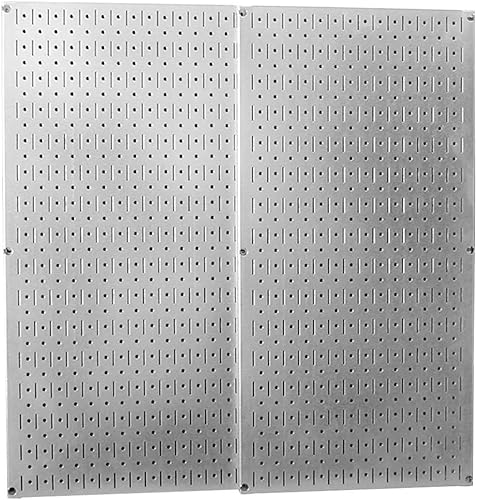
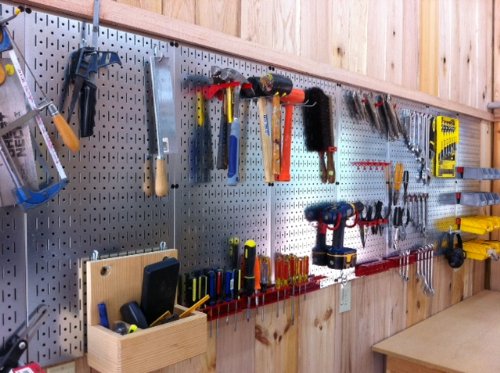
Prime Wall Control 30-P-3232GV Galvanized Steel Pegboard




As an Amazon Associate we earn from qualifying purchases. Product prices and availability are accurate as of the date/time indicated.
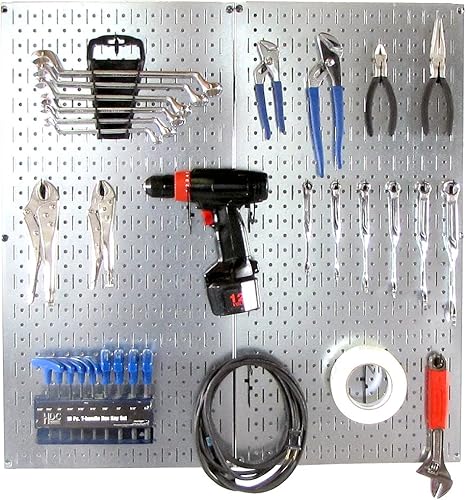
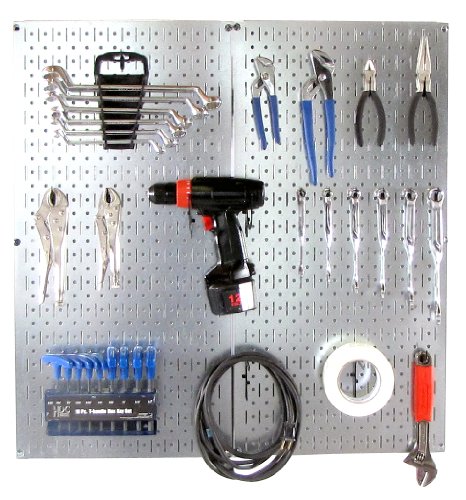
A steel panel with a formed flange and slotted holes, like the Wall Control 30-P-3232GV Galvanized Steel Pegboard, is one practical option if you would rather replace than keep troubleshooting, since its design helps maintain the gap from the wall and keeps hooks more stable. You can also explore best metal pegboard for basement storage if moisture has been part of the problem.
When to Skip This and Call a Professional
This type of bracing and re-anchoring is not ideal for walls that are damaged, crumbling, or showing signs of water intrusion, and it is not a good fit if the panel is holding very heavy loads above a workbench where a failure could cause injury. If anchors will not hold, the wall material is questionable, or you need to drill into masonry, concrete, or near electrical lines, skip this DIY fix and have a qualified handyman or contractor assess the wall and install proper blocking and anchors.
Frequently Asked Questions
Why is my pegboard panel bowing in the middle even though the edges are tight?
The edges are supported but the center is not. Most panels need fasteners across the middle, not just around the perimeter, otherwise weight in the center pulls the board away from the wall. Try adding one or two center anchors with spacers aligned to a stud.
Can I fix a bowed hardboard pegboard without buying a new one?
Sometimes you can. Try unloading it, letting it flatten under even weight on a flat surface in a dry area, then remounting it with additional center supports and proper spacers. If the board is soft, swollen, or the holes are worn, replacement is usually more reliable than trying to straighten it again.
Will adding more hooks help stop the bowing?
More hooks alone will not fix bowing and can make it worse if they add weight to the same unsupported area. Focus on adding wall anchors and standoffs behind the panel first, then spread heavy tools toward the stud-supported areas and keep the center load lighter.
Browse more picks in our Pegboard & Metal Pegboard category, or see our related guide on Best Pegboard Hooks for Workshop in 2026: 10 Picks for Organized Walls.
Write Your Review
No reviews yet. Be the first to share your experience!