

Quick Answer
If your workbench top wobbles while you saw, sand, or hammer, check the leveling feet and the bolts that connect the top to the frame first. Most workbench top wobbling during use comes from an uneven garage floor or hardware that has loosened with vibration over time. Level the feet, snug all fasteners, and confirm the top sits flat on its supports before you try anything more involved.
Why This Happens
Garage floors are rarely perfectly flat. Most concrete slabs slope slightly for drainage, and they often have small dips, cracks, or high spots that leave one leg floating. Even a gap of a few millimeters can make the whole top rock when you apply sideways pressure.
Hardware loosens with normal use. Vibration from hammering, sanding, and moving heavy items across the top can slowly back out the screws or bolts that hold the wood top to the steel frame. When those fasteners are even a little loose, the top can shift and flex instead of staying solid. If you are planning a layout for a tight space, ideas from the best garage workbench for 2 car garage can help you think about footprint and stability together.
Frame racking is another common cause. If the lower shelf is loaded heavily on one side, or the bench was moved without being lifted evenly, the rectangular frame can twist slightly out of square. That twist shows up as a wobble at the top, especially when you lean into the bench or push across it.
Wood tops also respond to humidity and temperature changes. An MDF or engineered wood top can expand, contract, or develop a slight bow if it was stored in damp conditions or exposed to moisture. If the top is no longer flat, it will not sit evenly on the frame rails, and you will feel movement even when the legs are level.
Fixes to Try
Try these steps in order, starting with the easiest checks. Work on a clear floor and have a helper steady the bench if it is heavily loaded.
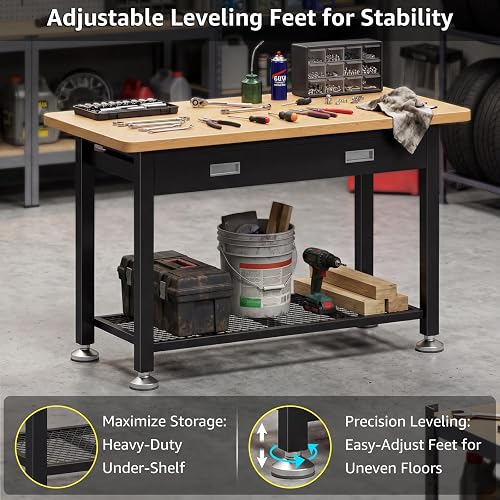
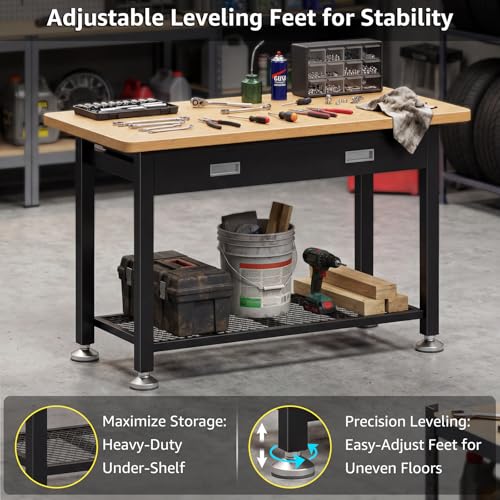
- Adjust the leveling feet. Set the bench where you use it most, then turn each foot until all four make firm contact with the floor. Check for rock by pressing on opposite corners and readjust until the bench sits without shifting.
- Tighten every connection between the top and the frame. Snug the screws or bolts that secure the top, plus the cross members and leg braces. Avoid over tightening into wood, just make them firm and even so the top cannot slide.
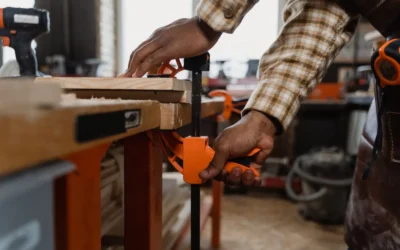
- Confirm the top is flat and fully supported. Look under the top for gaps between the wood and the frame rails. If you see a gap, loosen the top fasteners slightly, press the top down evenly, then retighten in a balanced pattern.
- Square and balance the frame. Empty the lower shelf, check that diagonal measurements across the frame are equal, and gently rack the bench back into square if needed. Reload the shelf with weight spread evenly and kept low.
- Add stability at the base. Try non slip rubber pads under the feet on smooth concrete, or consider anchoring a bench that will stay in one place to the wall studs with a proper bracket if the design allows it. For wall related setups, the best foldable workbench for concrete wall offers context on wall anchoring considerations.
If the wobble improves but does not disappear, repeat the foot adjustment after you reload tools. Added weight often changes how the feet sit, so a final tweak with the bench loaded is usually needed.
When to Consider Replacing It
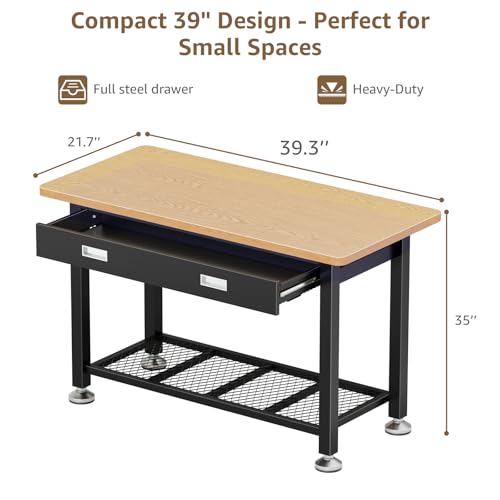
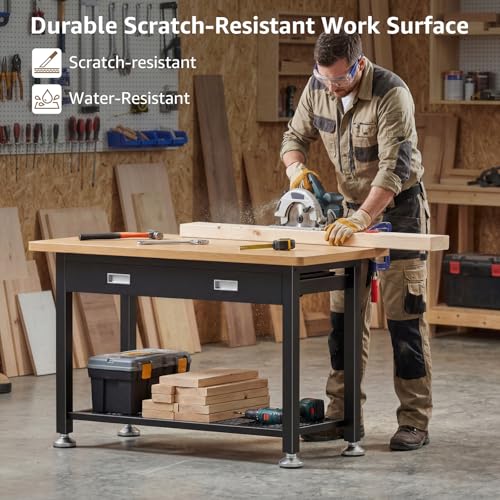
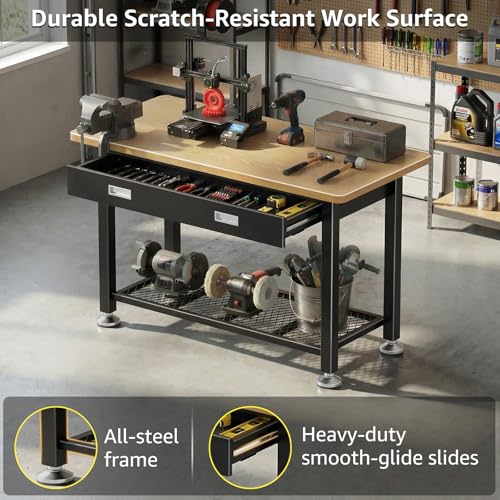
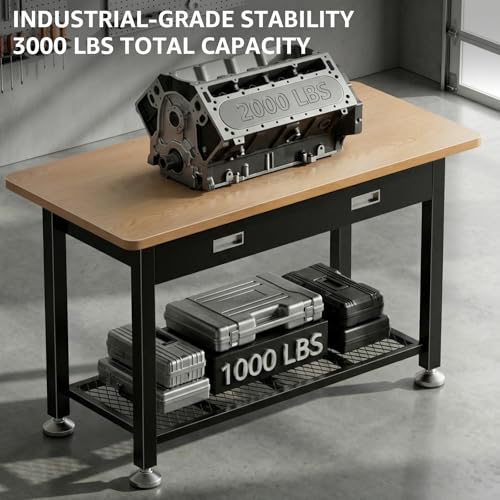
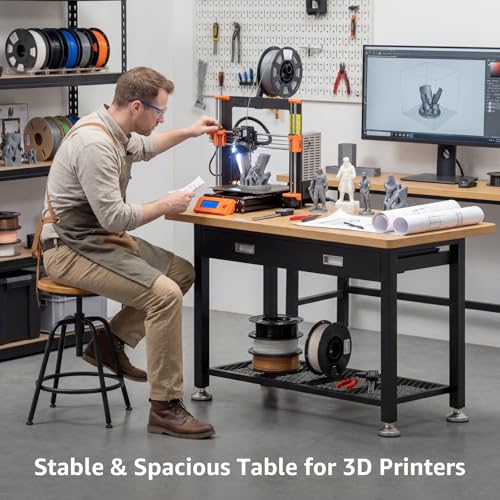
Repair makes sense when the frame is still square and the hardware holds tight. If the leg welds are cracked, the bolt holes are stripped and will no longer hold, or the wood top is swollen, delaminated, or permanently bowed, steadying it becomes difficult. At that point, replacing the bench is often simpler than chasing wobble. If you would rather replace it than keep troubleshooting, one practical option to consider is the 39″ Heavy Duty Work Bench With Drawer and Storage, which uses a thick MDF top on a powder coated steel frame, a steel drawer on smooth glide slides, a reinforced lower shelf, and adjustable leveling feet to help with uneven floors. Also browse best work bench with pegboard for concrete wall if you want integrated wall storage with your next bench.
This article contains affiliate links. If you buy through one of our links, TheGarageCrafted may earn a commission at no extra cost to you. Commissions never influence which products we recommend or how we rank them. Read our Affiliate Disclosure for details.

Prime IGERI 39" Heavy Duty Workbench with Drawer




As an Amazon Associate we earn from qualifying purchases. Product prices and availability are accurate as of the date/time indicated.
When to Skip This and Call a Professional
This general guidance is not ideal for benches that are damaged, heavily modified, or used to support loads beyond their intended design. If the frame is bent, welds are broken, the top is structurally compromised, or you are considering lagging the bench into concrete or tying it into electrical work for built in power, skip this DIY approach and follow the manufacturer instructions or consult a qualified professional for anchoring and load guidance.
Frequently Asked Questions
Why does my workbench top wobble only when I push sideways?
Sideways force highlights racking and uneven feet more than downward weight does. Check that all four feet are in contact with the floor and that the frame braces and top fasteners are snug. An uneven load on the lower shelf can also make sideways push feel worse.
Can I fix a wobbly workbench top without drilling new holes?
In many cases, yes. Try leveling the feet, tightening existing hardware, reseating the top so it sits flat on the rails, and redistributing weight on the lower shelf. New holes are usually only needed if the original holes are stripped or the top has shifted permanently.
Will adding weight to the lower shelf stop the wobbling?
Adding balanced weight low can help dampen movement, but it will not correct an unlevel foot or a loose top. Level and tighten first, then reload the shelf evenly. If wobble remains after those steps, the top may be warped or the frame out of square.
Browse more picks in our Workbenches & Workstations category, or see our related guide on Best Foldable Workbench for Concrete Wall: 10 Picks for 2026.



Write Your Review
No reviews yet. Be the first to share your experience!