

Quick Answer
If your 5-tier garage shelving not holding weight is sagging, bowing in the middle, or wobbling when loaded, the most common cause is weight that is not evenly distributed or that exceeds the per-shelf rating, combined with loose rivets, clips, or leveling feet. Try redistributing heavy items to the lowest shelves, tightening all connections, and leveling the unit on a flat surface before you consider replacing it.
Why This Happens
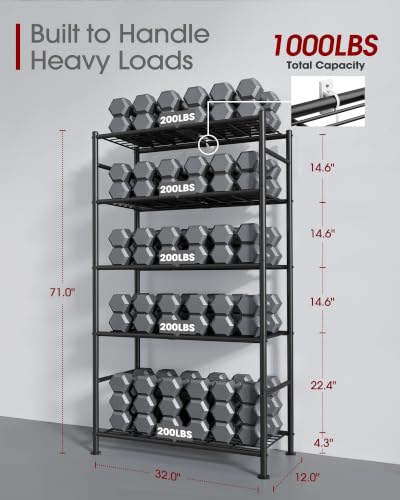
Most 5-tier units are rated for a total capacity and a lower per-shelf capacity when weight is evenly distributed. Placing one very heavy tote or toolbox in the center of a shelf concentrates load where the shelf is weakest, which can cause visible sag even if the total weight seems fine.
Assembly hardware is another frequent culprit. Boltless rivet-lock systems, wire shelf clips, and support bars can work loose over time, especially if the unit was assembled without fully seating each joint. When those connections are not locked, the frame flexes and shelves cannot transfer weight to the posts as intended.
Floor and placement issues also reduce holding power. An uneven garage floor, a missing leveling foot, or a unit that is not anchored to the wall can lean slightly, which shifts load to one side and makes the whole rack feel unstable. Humidity can also soften MDF decking over time, so boards may bow more quickly in damp basements or garages.
Finally, shelf spacing matters. If tall, heavy items force you to leave only one or two shelves carrying most of the load while others sit empty, you are not using the vertical structure efficiently. That imbalance puts extra stress on the loaded levels and on the uprights.
Fixes to Try
Work through these steps in order, starting with the easiest and safest. Check your manufacturer instructions for weight limits and anchoring guidance as you go.
- Unload and check the ratings. Remove everything, then review the per-shelf and total capacity in your manual. Plan to keep the heaviest bins, toolboxes, and bulk goods on the bottom shelf and lighter items up top, with weight spread evenly from side to side.
- Re-seat every connection. With the unit empty, confirm each rivet, clip, and support bar is fully locked into its slot. Tap joints gently with a rubber mallet if your manual allows it, then tighten any screws that secure the shelf frames.
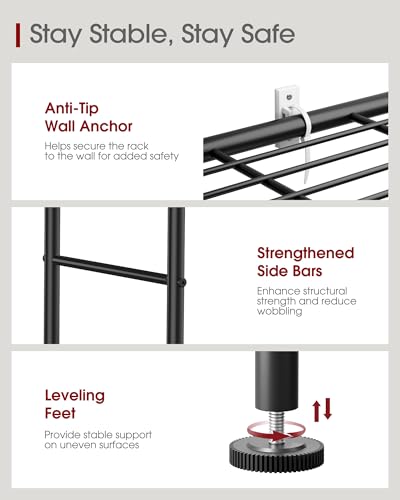
- Level the frame. Adjust the leveling feet until all four posts contact the floor firmly and the unit does not rock. If your floor has a noticeable slope, try repositioning the rack to a flatter area and use a small level on the front and side beams to confirm.
- Add support and rigidity. Make sure center support bars or cross braces are installed on every tier that requires them, and that MDF or wire decks sit flat in their frames. For wire shelves, ensure the deck is oriented correctly so the reinforced edges provide support.
- Anchor and reload carefully. If your unit includes a wall fixing kit or anti-tip hardware, install it into a suitable wall anchor point following the manufacturer instructions. Reload slowly, placing the heaviest items low and centered over the uprights, and leave a little space between bins so you can see if any shelf starts to bow.
If you still notice sag after these steps, you may find helpful context in our guide to shelving unit Won’t stay Level? 5 fixes before you give up and tips for organizing on uneven surfaces in how to organize boltless shelving on concrete walls.
When to Consider Replacing It
If shelves stay bowed even when empty, posts are bent, welds are cracked, or MDF boards are swollen and soft from moisture, repair is usually not worth the effort. Persistent wobble after re-seating joints and leveling also suggests the structure has been overstressed. In that case, replacing with a unit that matches your actual load needs and includes leveling feet and wall anchors can save time.
This article contains affiliate links. If you buy through one of our links, TheGarageCrafted may earn a commission at no extra cost to you. Commissions never influence which products we recommend or how we rank them. Read our Affiliate Disclosure for details.

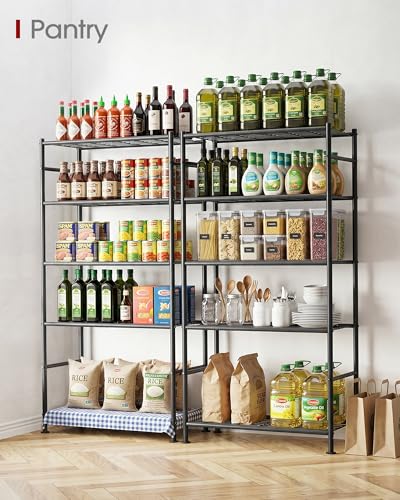
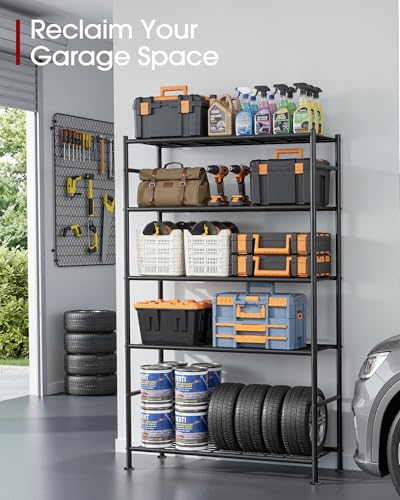
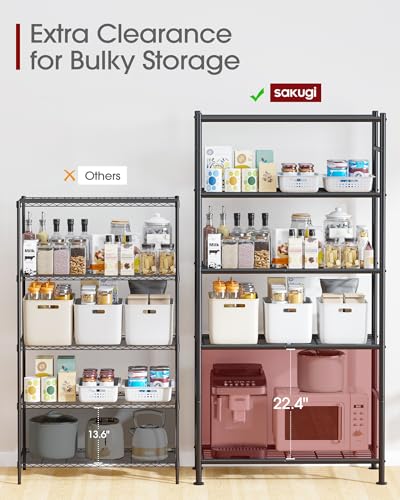
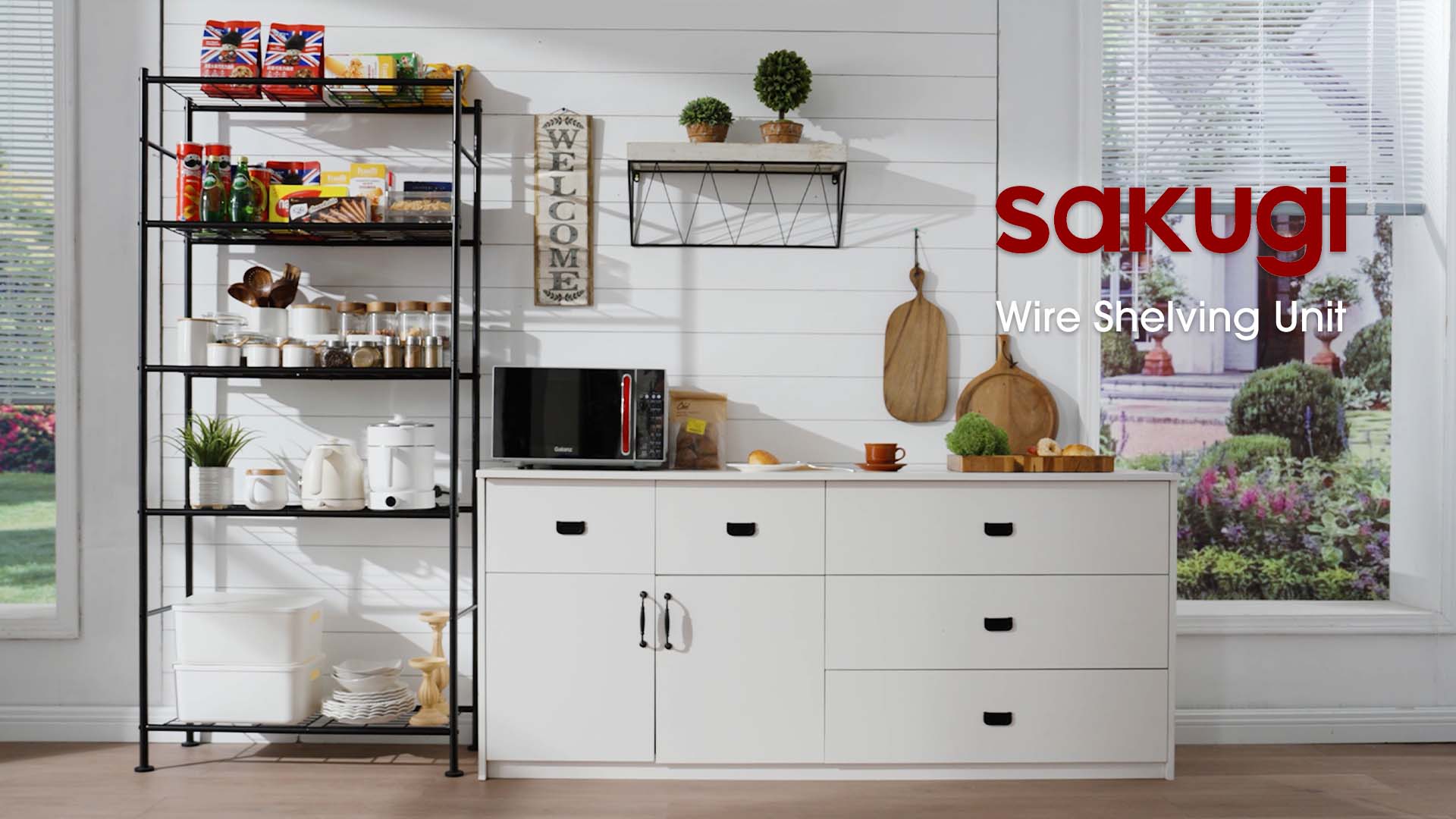
Prime Sakugi 5 Tier Heavy Duty Garage Shelving Unit


As an Amazon Associate we earn from qualifying purchases. Product prices and availability are accurate as of the date/time indicated.
When you do compare options, look for clear per-shelf ratings for evenly distributed loads, reinforced support bars, and adjustable leveling feet. A compact footprint that fits your garage layout, like the models compared in HOMEDANT black 47.7″ deep 5 tier storage shelves vs heavy duty garage shelving 36″ W x 16″ D x 72″ H, can also help you use vertical space without overloading any single tier.
When to Skip This and Call a Professional
DIY adjustments are not ideal for tall, heavily loaded shelving that is already leaning, pulling away from the wall, or showing bent uprights. This type of repair is not a good fit if you need to anchor into masonry, concrete, or unknown wall materials, or if the unit must be secured to prevent tip-over in a busy garage with kids and vehicles. Follow the manufacturer’s weight capacity and anchoring instructions closely, and contact a qualified professional for wall anchoring or for any situation where stability feels uncertain.
Frequently Asked Questions
Why does my 5-tier garage shelving sag in the middle even though I am under the total weight limit?
Total capacity is not the same as per-shelf capacity, and most ratings assume weight is evenly distributed. Try spreading heavy items across the whole shelf and moving the heaviest loads to the bottom tier, then check that center support bars are installed correctly.
Can I fix a wobbly 5-tier shelf by just tightening the bolts?
Sometimes. Loose rivets, clips, or screws are a common cause of wobble, so re-seating each joint and adjusting the leveling feet often helps. If wobble continues after everything is locked and level, check for bent posts or damaged decking and consider anchoring the unit to the wall as directed by the manufacturer.
Should I put the heaviest items on the top or bottom shelf?
Place the heaviest items on the lowest shelf whenever possible. This lowers the center of gravity, reduces stress on upper shelves, and helps prevent tipping. Keep upper shelves for lighter, frequently used bins and leave heavy bulk storage low.
Browse more picks in our Heavy Duty Shelving & Racking category, or see our related guide on Boltless Shelving vs Storage Rack Compared.





Write Your Review
No reviews yet. Be the first to share your experience!