

Quick Answer
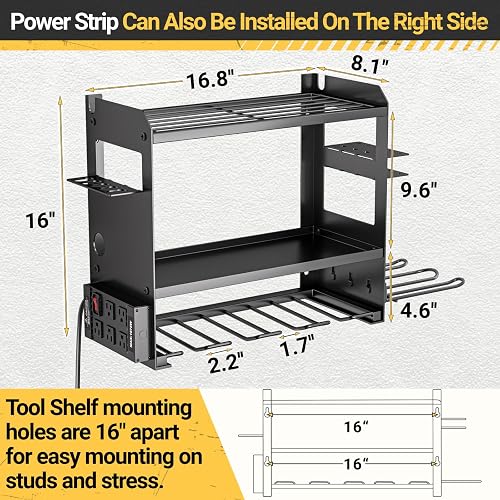
If your power tool wall mount too shallow for larger tools is the problem, the most likely cause is that the rack was sized for compact drills and drivers, not bulkier tools like circular saws, large sanders, or saws with big battery packs. Try measuring your deepest tool from the wall to its farthest point and compare it to the shelf depth, then move larger tools to the lowest shelf or side hooks where overhang is less likely to cause tipping. If tools still tip forward or crowd the next slot, a deeper auxiliary shelf or a deeper rack is usually the cleanest solution.
Why This Happens
Most power tool wall mounts are built with a slim profile to save garage wall space and keep drills easy to grab. That shallow depth works well for drills and impact drivers, but it leaves little room for tools with wide bases, tall motors, or protruding auxiliary handles. When the shelf is only a few inches deep, heavier tools hang over the front edge and feel unstable even if the weight is within limits.
Slot design and spacing add to the issue. Drill holders are typically narrow and placed close together to maximize capacity, so a larger tool body, an oversized chuck, or a bulky guard can wedge against the next holder. You may find that a circular saw or jigsaw will not sit flat or will block the adjacent slot, even when the rack itself is sturdy. For layout ideas that handle varied tool sizes, see this guide to the best tool wall mount for basement.
Battery and handle geometry creates hidden extra depth. A drill with a compact battery may fit perfectly, while the same drill with a high capacity pack sticks out an extra inch or more. Rotating handles, side grips, dust ports on sanders, and blade guards on saws all increase the effective front to back measurement you need, which is why two tools with similar weight can fit very differently.
Wall construction and mounting can make a shallow rack feel even shallower. If the organizer is not secured into studs or proper masonry anchors, it can tilt forward slightly under load and exaggerate overhang. In that position, tools lean out and feel less secure. If your walls are masonry or concrete, you may want to review options designed for that surface, like those in best power tool organizer for concrete wall, and always follow the manufacturer’s anchoring guidance.
Fixes to Try
- Measure your tools and your rack. Use a tape measure to check the shelf depth and the deepest point of each large tool, including battery, handle, and guard. Note how much overhang you have so you know whether a small reposition will help or you need a deeper solution.
- Reassign positions by size and weight. Put your bulkiest tools on the lowest shelf or on side hooks where the center of gravity is lower and a little overhang is less likely to cause tipping. Keep compact drills and drivers up top where shallow depth is not a problem.
- Adjust shelf height and spacing if your rack allows it. Raising a shelf by one notch can give a tall tool more clearance, and removing one drill holder can create a wider bay for a saw body. Check the manual for how to reposition shelves without weakening the frame.
- Add a deeper support for just the oversized tools. You can mount a simple deeper wooden shelf or a separate hook rail just below the main organizer for the one or two tools that do not fit. Keep any added shelf anchored into studs, keep it level, and do not exceed the wall’s safe load. For low clearance areas, you may find helpful layout ideas in low ceiling drill holder wall mounts.
- Check that the mount itself is level and secure. Confirm the mounting screws hit wall studs or the correct masonry anchors and that the rack does not tilt forward when loaded. A loose or tilted mount exaggerates shallow depth because tools lean out, so tightening and leveling can make the existing depth much more usable.
When to Consider Replacing It
If you have tried repositioning and your largest tools still overhang by more than an inch, wobble when you slide them in, or block neighboring slots, the rack is probably not the right depth for your collection. Forcing tools to fit can bend holders and loosen wall anchors over time, which makes the problem worse. If you would rather replace it than keep troubleshooting, a deeper multi tier option with more shelf depth and varied holder sizes can be a practical next step.
This article contains affiliate links. If you buy through one of our links, TheGarageCrafted may earn a commission at no extra cost to you. Commissions never influence which products we recommend or how we rank them. Read our Affiliate Disclosure for details.

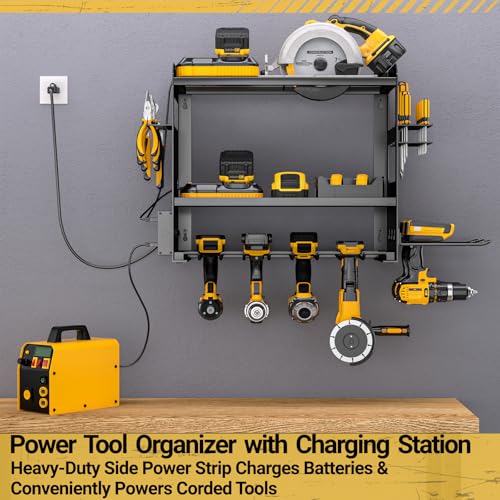
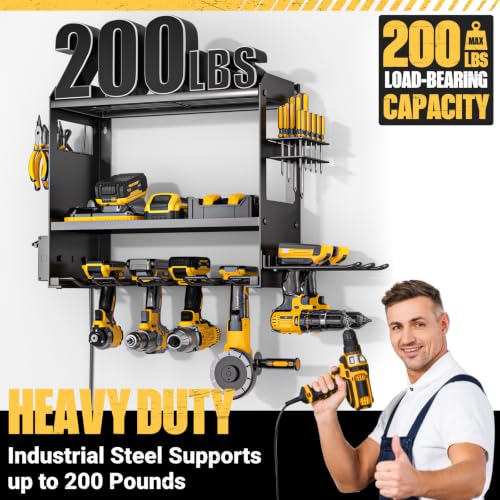
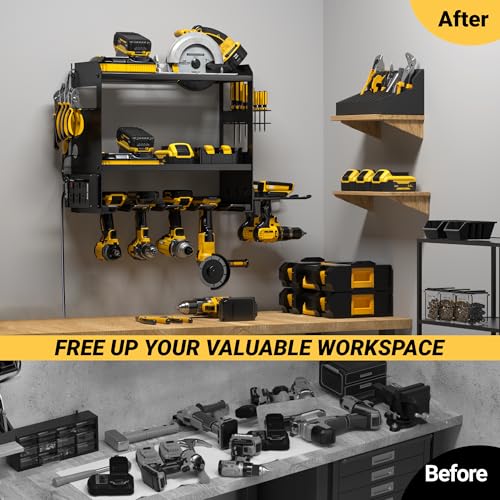
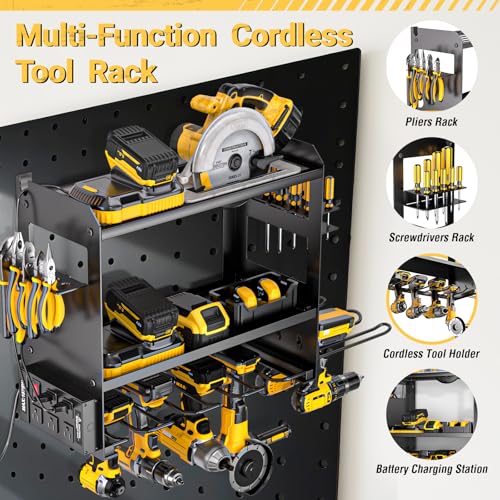
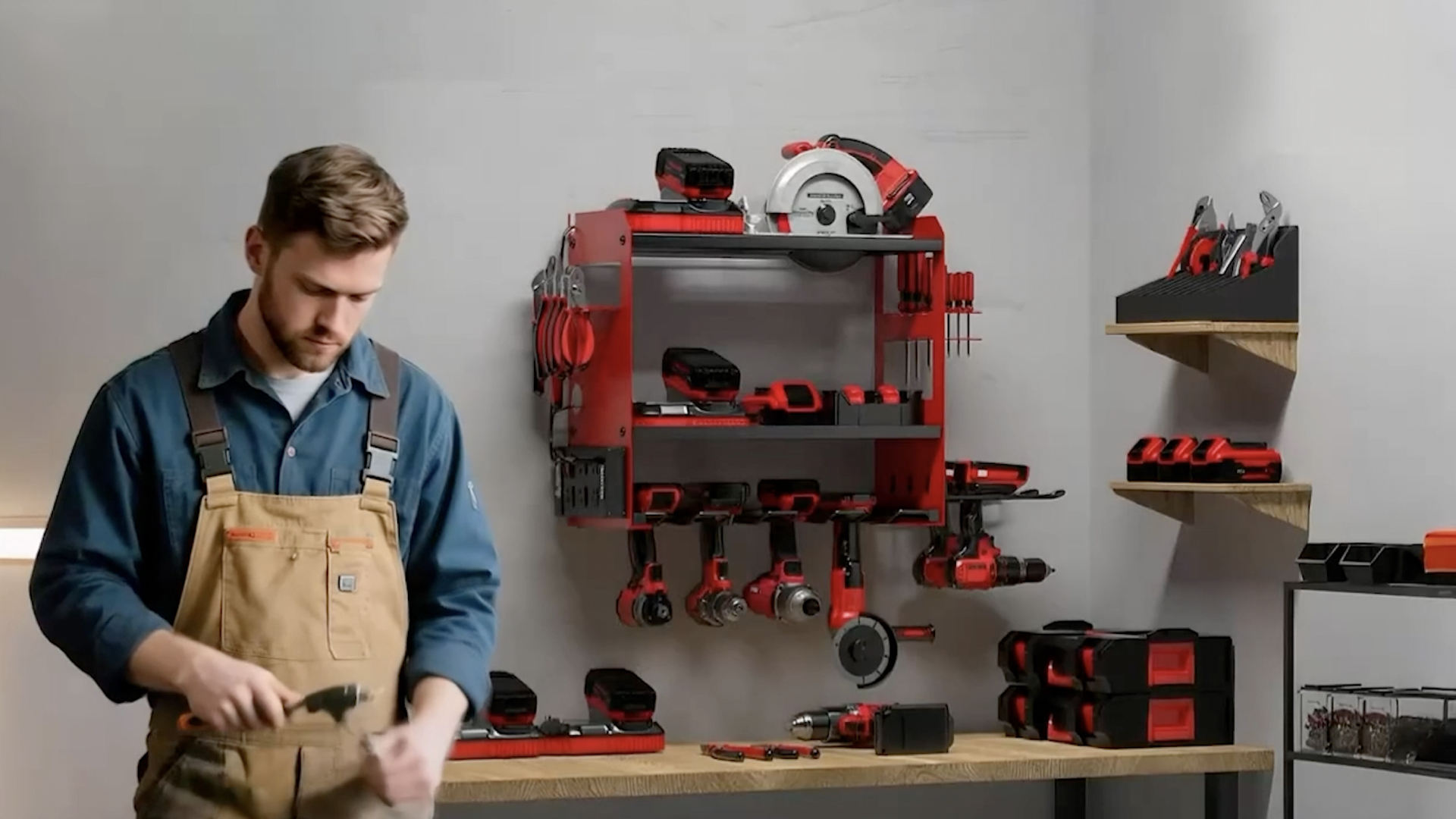
YYR Power Tool Organizer Wall Mount with Charging




As an Amazon Associate we earn from qualifying purchases. Product prices and availability are accurate as of the date/time indicated.
When to Skip This and Call a Professional
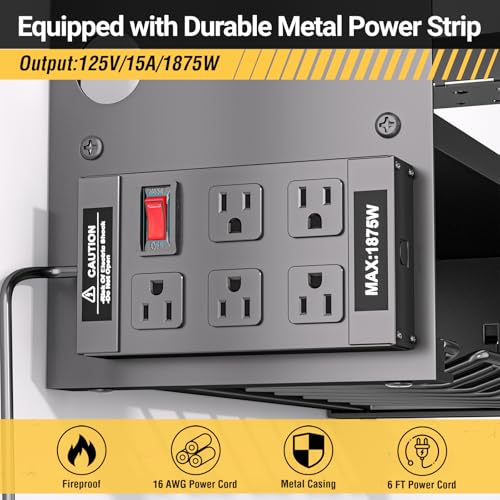
This kind of DIY adjustment is not ideal for situations involving electrical work or compromised wall structure. If your organizer includes an integrated power strip or charging station and you need to add, move, or hardwire outlets, that work is not recommended for DIY and should be handled by a licensed electrician. Skip this as well if the mount has pulled away from the wall, cracked drywall, or shows bent metal, and always follow the manufacturer’s weight capacity and wall anchoring instructions instead of adding makeshift extensions that could fail.
Frequently Asked Questions
Why does my power tool wall mount feel too shallow for larger tools even though drills fit fine?
Drills and drivers have a narrow, vertical shape that fits shallow holders well, while larger tools like circular saws, reciprocating saws, and belt sanders have wider bases and handles that need more front to back depth. The mount is not necessarily defective, it is just sized for a different tool profile, so you may need a deeper shelf or a different holder layout for bulky tools.
Can I make my wall mount deeper without buying a new one?
You can often gain usable depth without replacing the whole rack. Try moving bulky tools to side hooks, removing one divider to create a wider bay, or adding a separate deeper shelf below for just one or two oversized tools. Check that any added shelf is anchored into studs and does not exceed the manufacturer’s recommended load, and avoid bending or cutting the metal frame to force more depth.
How do I know what depth I need for my tools?
Measure each large tool from the wall side to the farthest point, including the battery, handle, or guard, then add about an inch of clearance so you can slide tools in and out without scraping. Use that number to compare against the shelf depth listed in the product specs before you choose a new organizer, and prioritize racks that list deeper shelves or adjustable tiers if you own several bulky tools.
Browse more picks in our Power Tool Wall Mount Organizers category, or see our related guide on Best Tool Wall Mount for Basement: 10 Organizers to Reclaim Space 2026.




Write Your Review
No reviews yet. Be the first to share your experience!