

Quick Answer
If your garage power tool cabinet wobbles, the most common cause is uneven contact with the floor, not a broken cabinet. Try adjusting the leveling feet, tightening all frame and wall anchor hardware, and shimming any gap under the feet until all four points sit solidly with no rocking.
Why This Happens
Garage floors are rarely perfectly level. They are often sloped for drainage and have dips, cracks, or raised seams that leave one cabinet foot floating. Even a small gap under one corner will make a tall, narrow tool cabinet rock every time you open a door or pull out a drawer.
Loose hardware is another frequent culprit. Vibration from power tools, repeated door slams, and seasonal wood movement can loosen leveling feet, frame bolts, and wall mounting screws. If you have a wall-mounted organizer nearby, a similar issue can show up as flex in the rail, which is why checking how your system is anchored matters. You can see how wall systems handle load in this look at Wall Control Pegboard Organizer for small garage setups.
Weight distribution also plays a big role. Power tools, batteries, and chargers are heavy and often stored on one side or on the door. That uneven load raises the center of gravity and amplifies any small wobble. Over time, an overloaded top shelf or door rack can twist the cabinet frame slightly, so the feet no longer sit flat even on a level floor.
Finally, floor contact materials matter. Hard plastic glides can slide on smooth concrete or epoxy, while worn or missing rubber pads let the cabinet walk. Humidity and temperature swings in the garage can also cause wood cabinets to swell or shrink, loosening threaded inserts that hold the feet. For more ideas on wall-mounted options that avoid floor contact altogether, browse the Power Tool Wall Mount Organizers category.
Fixes to Try
Work through these steps in order, starting with the easiest and safest. You will need a level, a wrench or pliers, a screwdriver, and thin shims or cardboard for checking gaps.
- Check for flat contact and adjust the feet. Empty the cabinet, set a level on top front to back and side to side, and turn the leveling feet in or out until the bubble centers and the cabinet no longer rocks when you push diagonally on the top corners. If a foot spins without gripping, the threaded insert may be loose and needs to be reseated.
- Tighten every frame and hinge connection. With the cabinet empty, snug all corner bolts, side panel screws, and door hinge screws. Do not overtighten into particle board or thin sheet metal, just make them firm so the frame cannot flex. Retest for wobble after each round of tightening.
- Secure the wall anchoring if it is a wall-mounted or anti-tip model. Confirm the cabinet is fastened into studs or proper masonry anchors, not just drywall. Tighten lag screws or anchor bolts and verify the anti-tip strap or wall cleat is taut. If anchors spin or pull out, relocate to solid backing rather than using larger screws in the same weak hole.
- Shim and stabilize the base. If the floor has a noticeable dip, place a hard rubber or composite shim under the floating foot after leveling, so weight is spread evenly. Avoid soft wood shims that compress or stack of paper that will shift. For cabinets that slide on epoxy or sealed concrete, add non-slip rubber pads under the feet to improve grip.
- Rebalance the load and recheck. Reload heavy tools low and centered, keep lighter chargers and accessories up high, and avoid hanging heavy drills all on one door. Close the doors and gently rock the cabinet again. If it is stable empty but wobbles loaded, redistribute weight before making further adjustments.
If you have tried leveling and tightening and the cabinet still rocks, look closely at the feet themselves. Stripped threads, cracked plastic bases, or missing lock nuts let height settings drift, and a foot that will not hold its adjustment will keep causing movement. Related wall storage ideas that reduce floor leveling issues are covered in best tool wall mount for basement options, which show how different mounting styles handle uneven surfaces.
When to Consider Replacing It
Consider replacement when the cabinet frame is twisted, the threaded inserts for the feet are stripped and will not hold, or the base is cracked or rusted through. If you have leveled, tightened, shimmed, and rebalanced and the wobble returns quickly, the hardware is likely worn beyond simple adjustment.
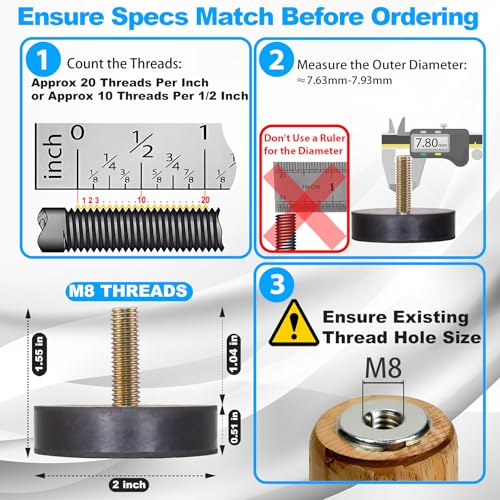
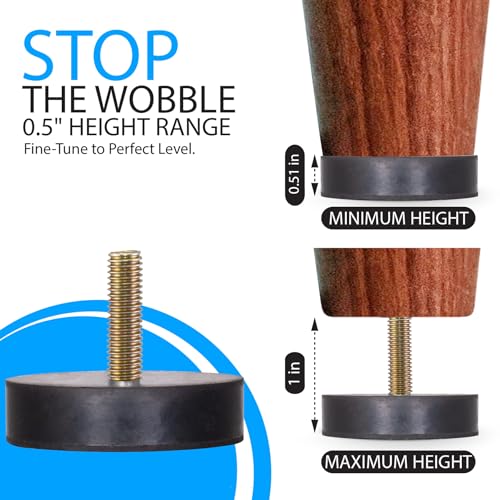
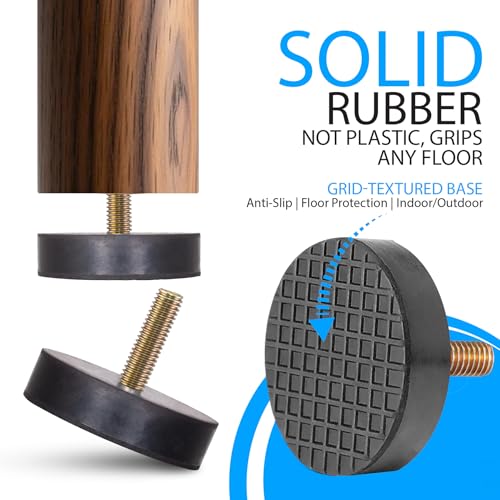
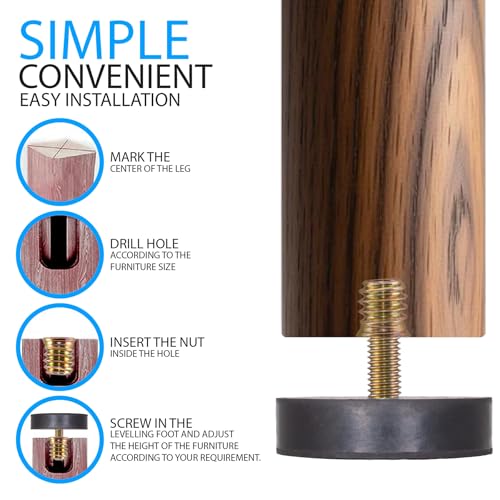
If you would rather replace the feet than the whole cabinet, one practical option is the M8 Heavy Duty Rubber Leveling Feet which uses a wide rubber base to grip concrete and hard floors and includes lock nuts to help hold your height setting. Verify your thread size first, as this option uses true M8 threads and is not intended for 5/16 inch or M6 holes.
This article contains affiliate links. If you buy through one of our links, TheGarageCrafted may earn a commission at no extra cost to you. Commissions never influence which products we recommend or how we rank them. Read our Affiliate Disclosure for details.

Prime lleduli M8 Heavy Duty Rubber Leveling Feet 4-Pack




As an Amazon Associate we earn from qualifying purchases. Product prices and availability are accurate as of the date/time indicated.
Replacing just the leveling feet is often enough if the cabinet box is still square and solid. If the cabinet itself is racked or the wall anchors have damaged the back panel, a new cabinet with sturdier hardware will give you a more stable long term result.
When to Skip This and Call a Professional
DIY leveling and tightening is not ideal for cabinets that are heavily loaded, very tall, or wall-mounted to concrete or block where anchors have failed. If the cabinet is pulling away from the wall, tipping forward when loaded, or you see cracked masonry, bent brackets, or stripped studs, skip this and have a qualified installer or contractor reassess the anchoring and load limits. Always follow the manufacturer weight capacity and wall-anchoring instructions and anchor tall cabinets to prevent tip-over, rather than adding makeshift braces or overloading beyond the rated use.
Frequently Asked Questions
Why does my garage power tool cabinet wobble only when the drawer is open?
This is usually a balance issue. An extended drawer full of tools shifts weight forward, so any small gap under a front foot becomes obvious. Try re-leveling with the drawer closed, then reload with heavier items lower and centered, and confirm anti-tip hardware is engaged.
Can I fix a wobbly cabinet on a sloped garage floor without drilling?
Yes, in many cases you can. Try adjusting the leveling feet to compensate for slope and add firm, non-slip shims or rubber pads under the short side. If the slope is significant or the cabinet must stay perfectly level for drawers to operate, wall anchoring may still be needed for stability.
How do I know if the leveling feet need to be replaced?
Look for feet that will not hold height, threads that spin freely, cracked or compressed bases, or missing lock nuts. If you adjust the height and it drifts again after a few days of normal use in 2026, replacing the feet with a matching thread size and a wider, rubber base often restores solid contact.






Write Your Review
No reviews yet. Be the first to share your experience!