

Quick Answer
If your impact driver wall mount not holding weight is sagging, tilting, or dropping tools, the most likely cause is that the screws and anchors are not secured into a stud or the right wall anchor for your wall type. An impact driver with a battery creates a lot of leverage on a small mount, so even a slightly loose anchor will fail quickly. Try unloading the mount, checking the anchors for movement, and reinstalling with proper stud support or wall-rated anchors before you consider replacing it.
Why This Happens
Most wall mounts fail because they are anchored only in drywall. Drywall alone cannot support the concentrated, cantilevered load of an impact driver, especially with a heavy battery attached. Over time the anchors widen the hole, the mount tilts forward, and the tool slips out. Even if it felt solid at first, vibration from daily use can loosen undersized plastic anchors.
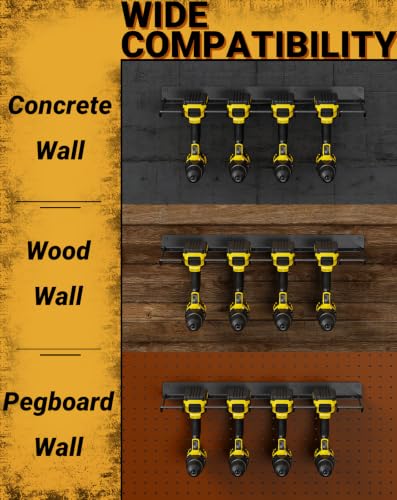
Using the wrong hardware for your wall material is another common cause. A mount installed with standard plastic anchors on concrete, brick, or plaster will not grip reliably, and wood screws driven into drywall without a stud will pull out under load. If you have concrete or block walls, you need concrete-rated anchors and a hammer drill for a proper pilot hole. See these concrete wall tool storage for examples of hardware designed for masonry.
Weight distribution also matters. An impact driver is nose-heavy and long, so it acts like a lever inside the holder. If the tool sits too far forward, hangs at an angle, or shares the rack with extra batteries, chargers, and bits, the center of gravity pulls the mount away from the wall. Many compact holders are designed for one tool per slot, and stacking extra weight in one spot can exceed what the mount was designed to support.
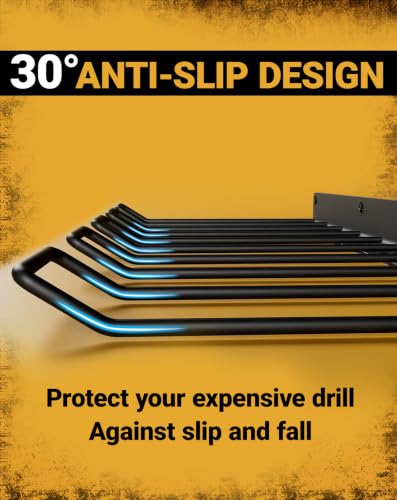
Finally, the mount itself may be worn or mismatched. Thin metal can bend, PVC coating can wear smooth and lose grip, and a holder with a shallow cradle or no anti-slip arc lets the tool rock and work itself loose. If the screw holes are elongated, the metal is deformed, or the coating is cracked, the holder will not keep tension on the tool even with solid wall anchors.
Fixes to Try
- Unload the mount completely and check the rating. Remove the driver, battery, and any extra accessories, then verify how much the manufacturer says the mount can support and how many tools it is meant to hold per slot. Try keeping one impact driver per cradle and storing batteries separately to reduce leverage.
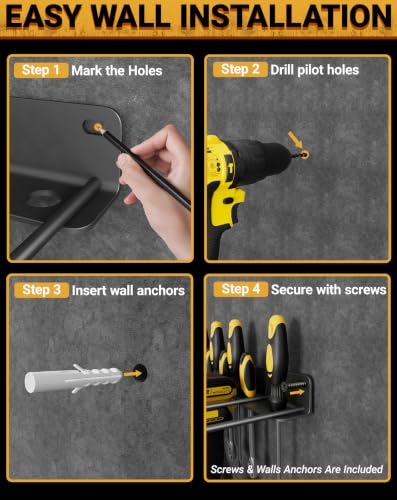
- Find solid backing and use the right anchor. Use a stud finder to locate a stud and drive screws directly into it where possible. For drywall without a stud, switch to toggle bolts or heavy-duty wall anchors rated for your wall type, and for concrete or brick use sleeve anchors or concrete screws with a properly sized pilot hole.
- Repair the wall holes and retighten everything. If anchors spin or feel loose, remove them, patch crumbling drywall with filler, let it cure fully, then drill a fresh pilot hole in a solid spot. Drive screws snug but not over-tightened, and confirm the mount sits flat against the wall with no wobble before reloading.
- Seat the tool correctly in the cradle. Place the impact driver so its body rests fully in the anti-slip arc or pocket with the battery seated and the nose supported, not hanging off the edge. If your holder has an adjustable width or 30-degree arc, adjust it so the tool cannot tip forward or slide sideways.
- Spread the load or add support. If you store multiple drivers and drills on one rack, move some to a second mount to balance the weight across more studs. For long-term organization, consider spacing mounts at stud intervals and comparing heavy-duty drill holder options that use thicker steel and wider mounting plates for better stability.
When to Consider Replacing It
If the metal is bent, welds are cracked, screw holes are stripped and enlarged, or the mount still sags after you have re-anchored it into a stud with correct hardware, repair is unlikely to help. A warped or undersized holder will keep letting the tool tip out. If you would rather replace it than keep troubleshooting, a solid steel rack with a deeper anti-slip cradle and wider mounting plate can be a practical option, and you can explore how modular systems like the Wall Control system handle heavier loads.
This article contains affiliate links. If you buy through one of our links, TheGarageCrafted may earn a commission at no extra cost to you. Commissions never influence which products we recommend or how we rank them. Read our Affiliate Disclosure for details.

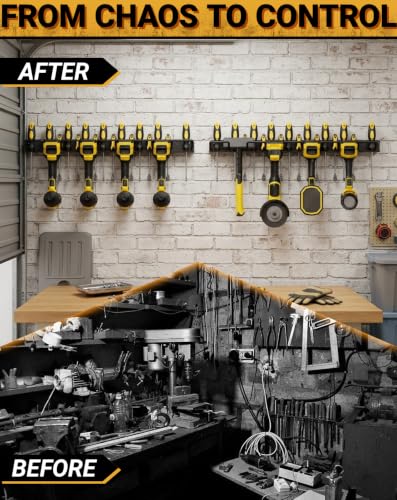
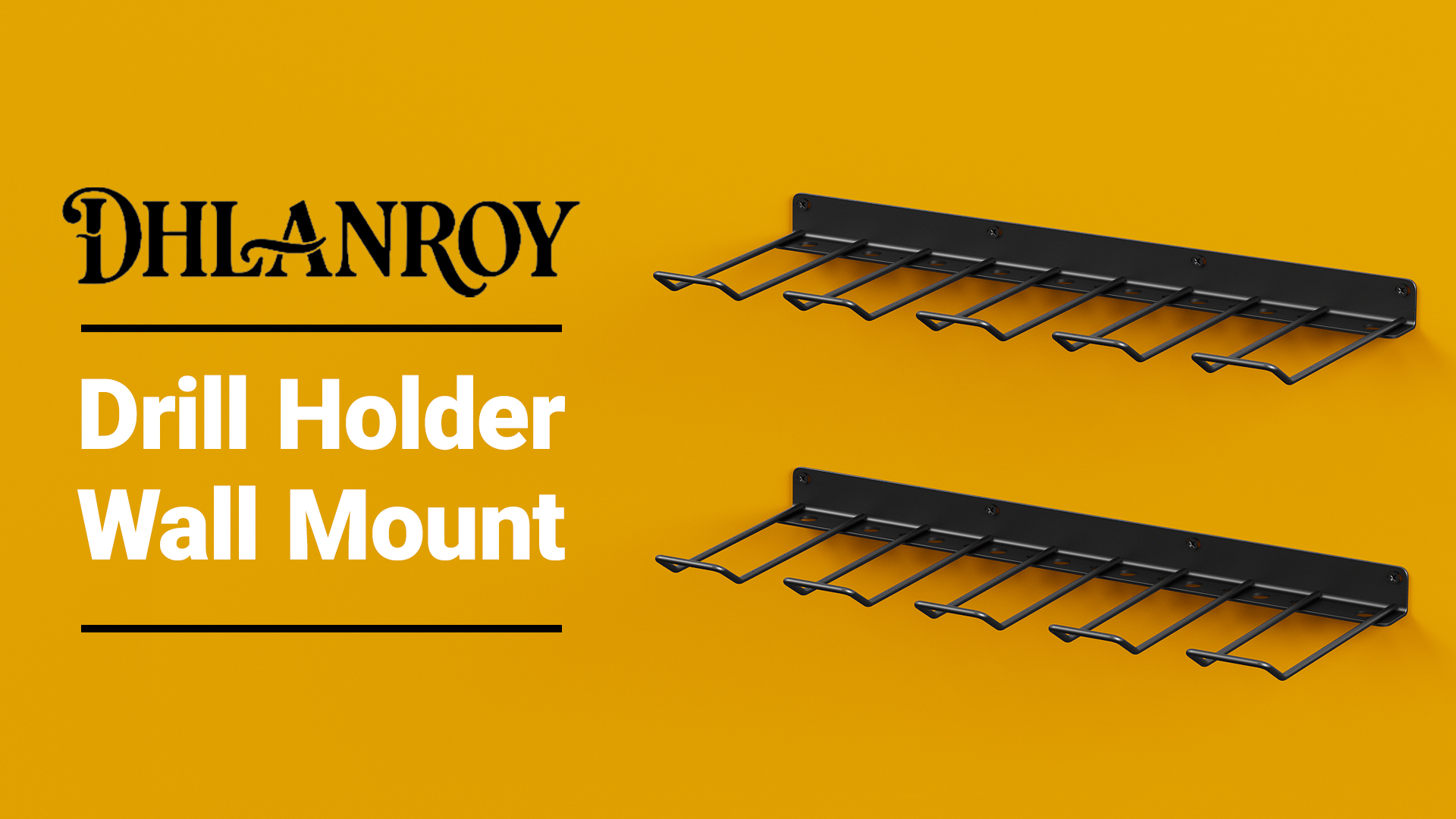
Prime DHLANROY 2 Pack Drill Holder Wall Mount
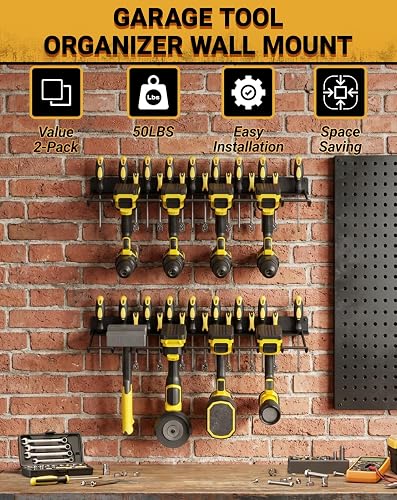


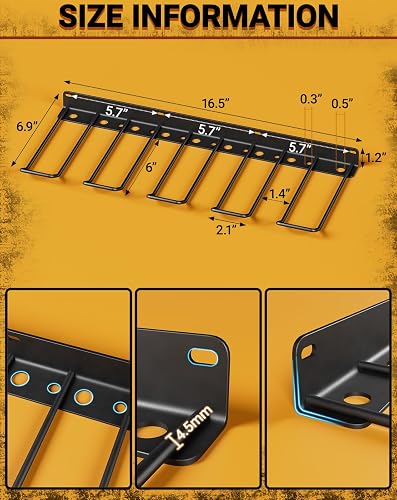
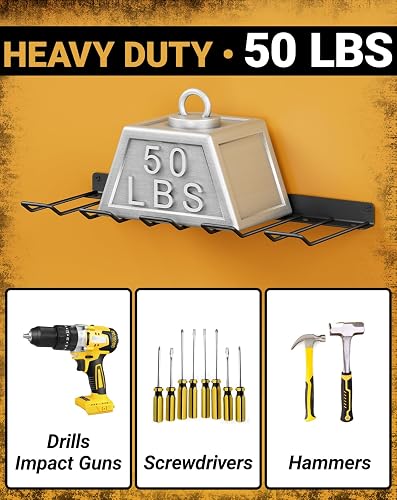


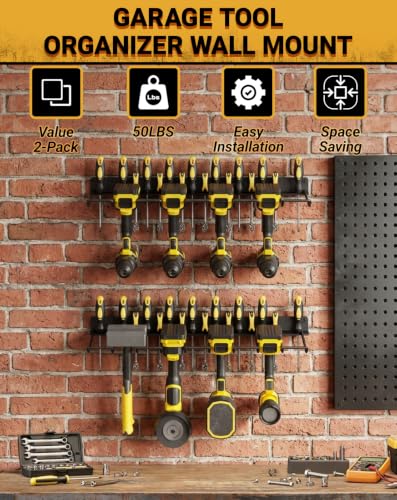
As an Amazon Associate we earn from qualifying purchases. Product prices and availability are accurate as of the date/time indicated.
When to Skip This and Call a Professional
DIY re-anchoring is not ideal for walls that are crumbling, water-damaged, or showing large cracks, or if the mount pulled out a big section of drywall or masonry. This approach is also not recommended for mounts that must be installed overhead or that support very heavy, wall-hung cabinets above your workbench. If the wall structure is compromised or you are unsure about the correct anchor for your wall type, skip this and have a qualified contractor or handyman assess the wall and install the mount with proper backing.
Frequently Asked Questions
Why does my impact driver wall mount keep falling off drywall?
The most common reason is that the screws are only in drywall without a stud or without a toggle-style anchor. Drywall crumbles under leverage, so the hole widens and the mount tilts. Try relocating the mount to hit at least one stud and using wall anchors rated for your wall material for the other holes.
Can I mount an impact driver holder on concrete or brick?
Yes, but you need concrete-rated hardware. Standard plastic anchors and wood screws will not hold. Try using concrete screws or sleeve anchors with a hammer drill and masonry bit sized exactly to the anchor, and confirm the mount sits flush and tight before you load the tool.
How do I stop my impact driver from tipping out of the mount?
Check that the tool body is fully seated in the cradle with the weight centered, not hanging nose-first. Remove extra batteries or accessories from the same slot, and look for a holder with a deeper pocket or anti-slip arc that keeps the tool from rocking. If the holder is shallow or smooth, it may not be the right choice for a heavier impact driver with a large battery.
Browse more picks in our Power Tool Wall Mount Organizers category, or see our related guide on Best Drill Holder Wall Mounts for Heavy Totes: 10 Sturdy Picks 2026.




Write Your Review
No reviews yet. Be the first to share your experience!