

Quick Answer
A sagging garage storage rack is most often caused by uneven weight distribution or loose connections, not a failed frame. Unload the rack completely, then check that every bolt, clip, and deck panel is fully seated and snug. Redistribute your heaviest items to the lowest shelf and toward the center near the vertical posts, and confirm the unit is level on the floor or firmly anchored into ceiling joists or wall studs. This reset fixes most sag without buying new parts.
Why This Happens
Overloading is the most common reason for fixing sagging garage storage rack issues. Even when you are within the overall rated load, placing all the heavy bins or tools on one shelf or on the outer edge creates a bending force in the middle. Wire decks and particle board shelves are especially prone to bowing when weight is concentrated in the center span between supports.
Loose or missing hardware also allows a rack to sag and sway. Bolts can loosen over time from vibration, seasonal temperature changes, and repeated loading. On boltless or clip-style shelving, a shelf clip that is not fully locked into the post slot or a pilaster clip that has slipped will let one corner drop, which makes the entire level look bowed. If you are dealing with wobble along with sag, see shelving unit Won’t stay Level? 5 fixes before you give up for related leveling tips.
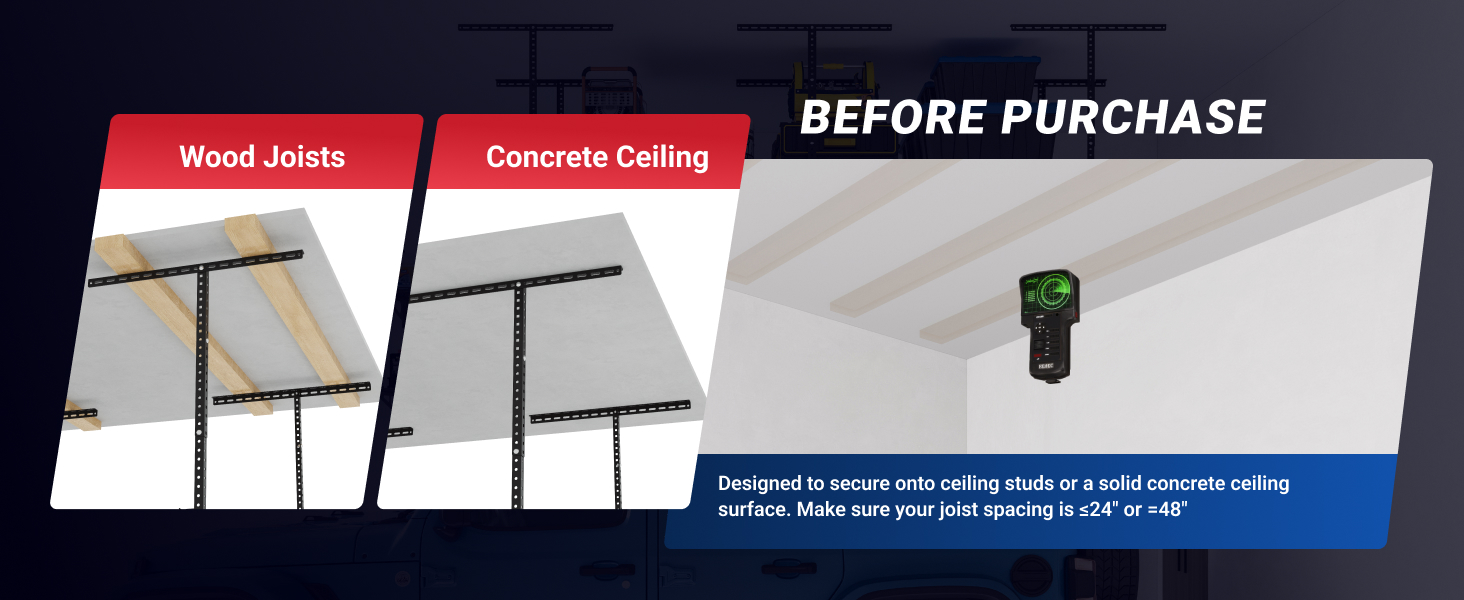
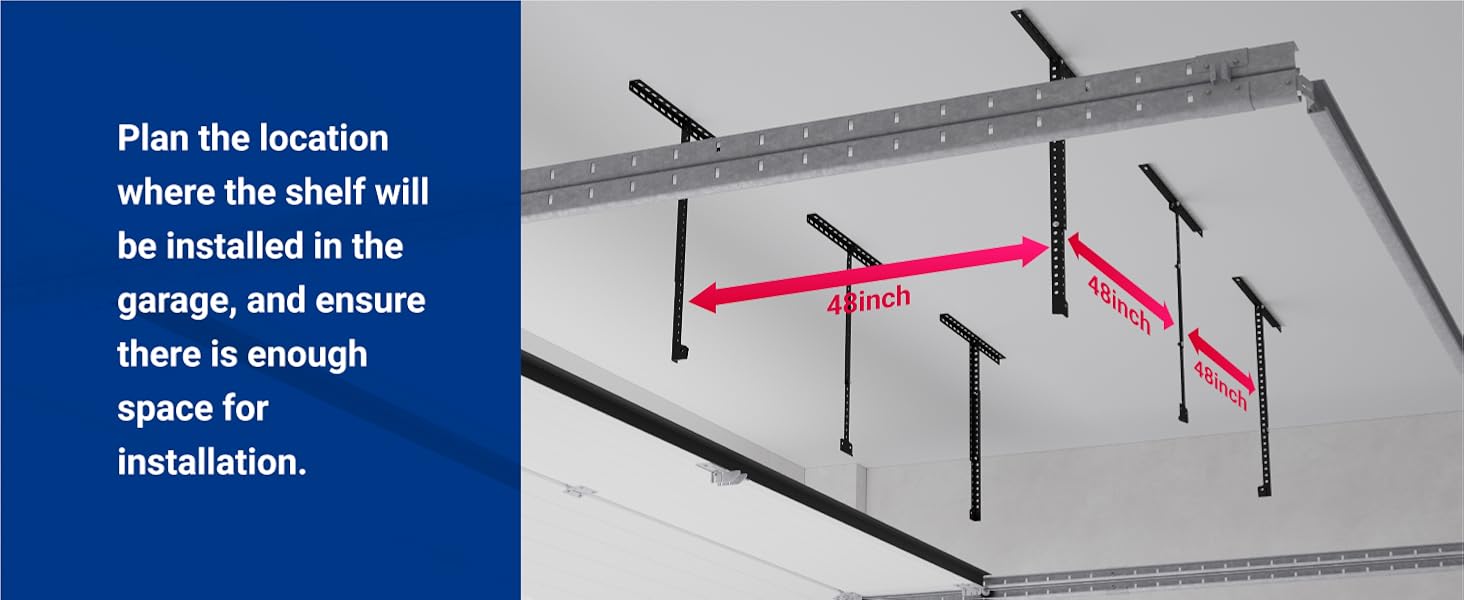
An uneven or soft mounting surface contributes to sag. Freestanding racks on a sloped garage floor will lean and put extra stress on one side, while overhead racks lagged into drywall instead of solid wood joists or concrete will slowly pull down under load. Ceiling-mounted systems need long brackets anchored into at least two joists, and freestanding units need level feet and often a wall anchor to stay square. Learn more about proper anchoring in how to organize boltless shelving on concrete walls.
Material fatigue and environment play a role as well. Thin wire shelves can bend permanently if they have carried heavy paint cans or totes for months, and humidity can weaken particle board decks so they droop. Comparing frame styles can help you understand why some designs hold up better, as explained in HOMEDANT black 47.7″ deep 5 tier storage shelves vs heavy duty garage shelving 36″ W x 16″ D x 72″ H. Once a beam or deck has a permanent bow, tightening alone may not straighten it.
Fixes to Try
Try these steps in order, starting with the easiest and safest. Always unload the rack first so you can see the true shape of the frame and avoid pinching hazards while you work.
- Unload completely and inspect for damage. Remove everything, then look at each shelf, beam, and deck for bows, cracks, bent tabs, or missing clips. Check that vertical posts are plumb and that ceiling brackets or wall anchors are still tight and in solid wood or concrete, not just drywall.
- Tighten and reseat every connection. With the rack empty, snug all bolts and nuts by hand, then give a final quarter turn with a wrench. For clip and slot systems, lift each shelf slightly and make sure all four clips are fully engaged at the same height. Replace any bent or missing clips before reloading.
- Level the base or ceiling mount. For freestanding racks, adjust the leveling feet until the frame does not rock, and use a small level on each shelf. For overhead racks, confirm the brackets are centered on joists and that lag screws are solid, following the manufacturer spacing guidance for joists on 24 inch centers.
- Redistribute weight correctly. Place the heaviest, densest items on the lowest shelf and closest to the vertical posts or wall brackets. Keep lighter, bulkier items up top and spread weight evenly across the deck rather than stacking it in the middle. Avoid exceeding the manufacturer rated capacity for any single shelf.
- Add support to the span. If the deck itself is bowing, try flipping the wire deck over, adding a center support beam if your model allows it, or laying a flat piece of plywood cut to fit inside the shelf lip to spread the load. This can reduce flex on wide spans without replacing the whole unit.
When to Consider Replacing It
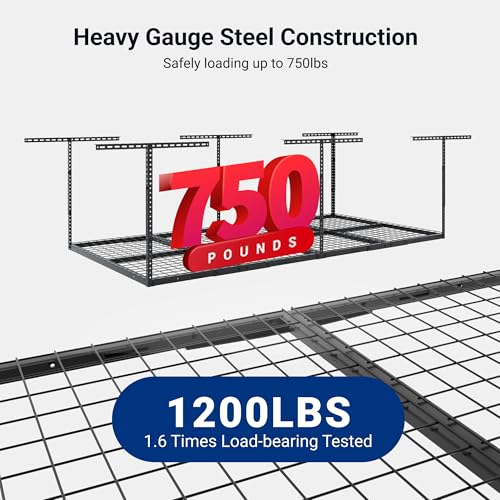
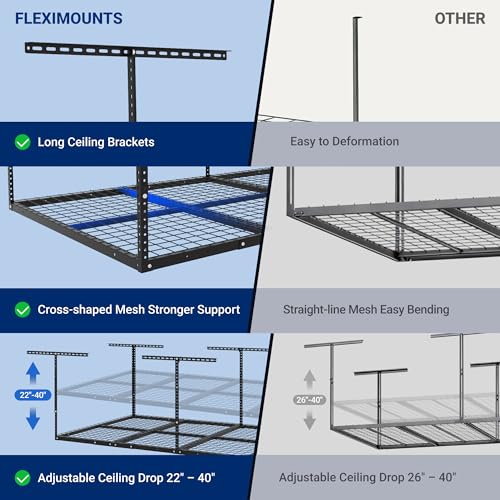
If beams stay bowed after unloading, welds are cracked, post slots are stretched, or a wire deck has a permanent dip that plywood cannot help, repair is no longer practical. Continuing to load a deformed frame can make sag worse and increase tip or drop risk. If you would rather replace it than keep troubleshooting, a ceiling-mounted option with multiple vertical posts and integrated wire decks can be a more stable alternative for long term overhead storage.
This article contains affiliate links. If you buy through one of our links, TheGarageCrafted may earn a commission at no extra cost to you. Commissions never influence which products we recommend or how we rank them. Read our Affiliate Disclosure for details.

FLEXIMOUNTS 4x8 Overhead Garage Ceiling Storage





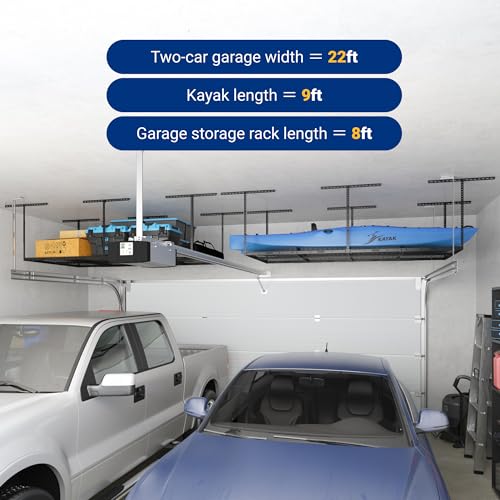

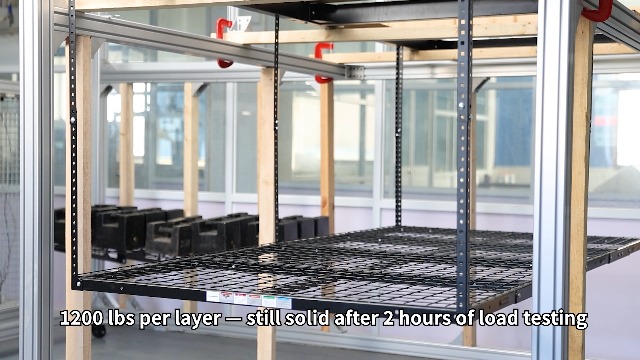
As an Amazon Associate we earn from qualifying purchases. Product prices and availability are accurate as of the date/time indicated.
When to Skip This and Call a Professional
This DIY troubleshooting is not ideal for overhead racks that have pulled away from the ceiling, shown cracked joists, or dropped noticeably on one side. Those issues involve structural loads and fall hazards and are not a good fit for a simple tighten and reload approach. Follow the manufacturer weight capacity and ceiling joist anchoring instructions closely, anchor tall freestanding shelving to the wall to prevent tip over, and contact a qualified contractor or the manufacturer for any ceiling mount that may have failed. If electrical wiring or lighting is near the mounting points, have a licensed electrician review it before drilling.
Frequently Asked Questions
Why is my garage rack sagging in the middle even though I am under the weight limit?
Most sag comes from how weight is placed, not just how much it weighs. A concentrated load in the center of a long shelf creates more flex than the same weight spread near the posts. Try moving heavy bins to the bottom shelf and toward the corners, and check that all clips are at the same height.
Can I fix a sagging wire shelf with plywood?
You can often reduce bowing by placing a flat plywood board cut to sit inside the shelf frame on top of the wire deck. This spreads the load across the entire span and helps prevent small items from pressing between wires. It will not fix a bent steel beam, so inspect the frame first while the shelf is empty.
How do I stop my overhead garage rack from sagging?
Unload the rack and confirm the ceiling brackets are lagged into solid wood joists or concrete as directed by the manufacturer, not just drywall. Tighten all vertical post hardware and make sure deck panels are fully seated, then reload with heavier items centered over the support beams. If the frame remains bowed or any anchor feels loose, avoid using it and seek professional help.
Browse more picks in our Heavy Duty Shelving & Racking category, or see our related guide on Boltless Shelving vs Storage Rack Compared.









Write Your Review
No reviews yet. Be the first to share your experience!