

If your two-car garage feels more like a parts warehouse than a workshop, you are not alone. Your workbench is buried under broken tote latches, cracked bins and a bracket that snapped in the cold, and you keep thinking you could print a stronger replacement if your printer was dialed in. That is the exact moment when tough, rapid PETG makes sense, especially when you want functional storage upgrades without rebuilding your cabinets for a 2-car garage.
This Overture PETG review looks closely at the OVERTURE High Speed PETG Filament 1.75mm in black on a 1kg spool. We reviewed the listed specs, recommended settings and owner reports behind its 4.3 out of 5 rating from more than 16,000 reviews to see where it fits in a garage workshop as of November 2026. You will learn how its high-speed tuning, AMS winding and tolerance affect real prints, plus where it falls short.
This article contains affiliate links. If you buy through one of our links, TheGarageCrafted may earn a commission at no extra cost to you. Commissions never influence which products we recommend or how we rank them. Read our Affiliate Disclosure for details.

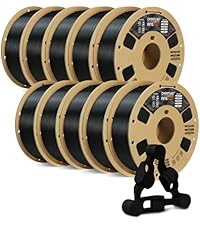
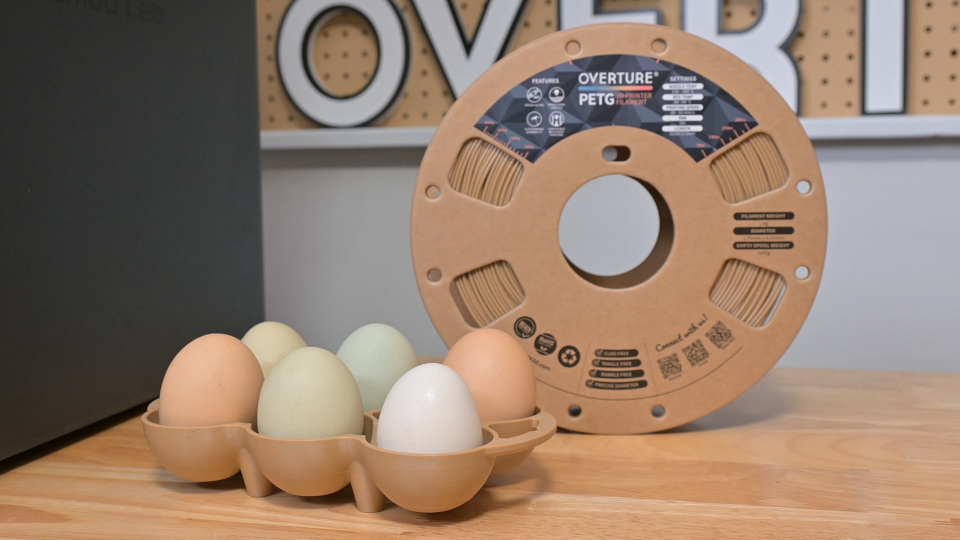
Prime OVERTURE High Speed PETG Filament 1.75mm 1kg






As an Amazon Associate we earn from qualifying purchases. Product prices and availability are accurate as of the date/time indicated.
What Stands Out
Rapid Flow Tuned for Up to 300mm/s
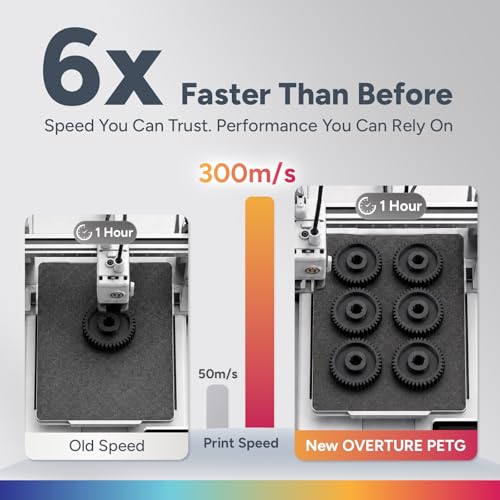
Overture positions this formula for rapid machines such as Bambu Lab, Creality K1 and Voron printers, with an emphasis on flow consistency rather than headline speed alone. The listed benefit is smooth extrusion and stronger layer bonding when you push pace, which helps reduce underextrusion and delamination that often show up on quick PETG runs. If you print brackets, spacers or tool holders in your garage, that stability matters more than raw velocity.
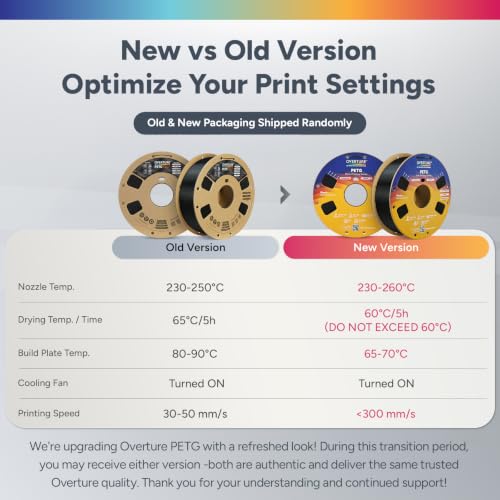
The recommended window is broad, with nozzle temp at 230 to 260 degrees Celsius, bed temp at 65 to 70 degrees, and speed from 30 to 300mm/s. That range gives you room to start slow for precise mechanical parts, then increase pace for draft housings or shop jigs once your profile is dialed. You should still tune retraction and cooling for your specific machine, but the spec sheet gives you a clear starting point.
Neat Winding Built for AMS and Long Overnight Jobs
The second standout is meticulous neat winding aimed at multi-material systems like AMS and MMU units. Overture describes a tangle-free spool with smooth retraction for seamless material switching and fewer snags during extended jobs. For garage owners who start a 20-hour organizer set after dinner and check it in the morning, that reliability is central, since a single snag can ruin an entire plate of functional parts.
Owners commonly report fewer feed interruptions when the spool is properly mounted and kept dry, which aligns with the low jam focus in the product description. You can support that advantage by storing open spools in a sealed tote with desiccant between runs, similar to how you protect sensitive hardware in covered bins. See how sealed storage helps in our IRIS USA 4-Pack 32 quart storage bins review for ideas that transfer well to filament care.
Tight Tolerance for Functional Parts That Must Fit
Overture lists an industry leading plus or minus 0.02mm dimensional tolerance, which is important when you print parts that must mate, thread or press together. That consistency helps reduce recalibration between spools and supports cleaner dimensions for clips, hinges, wall hooks and replacement latches. If you design or download mechanical assemblies for shop storage, you will appreciate filament that holds diameter from start to end of the spool.
The formula also aims for strong bed adhesion during printing with easier release once cooled, which helps protect PEI and glass plates from damage. That balance is useful in a cold garage where adhesion swings with ambient temperature and drafts. For more on how plastics behave when temps drop, read our guide on Clear Tote Cracking in a Cold Garage, since many of the same temperature lessons apply to bed adhesion.
Pre-Dried Vacuum Sealed Spool With Consistent Color
Each spool arrives vacuum sealed and pre-dried to support bubble-free extrusion with less stringing out of the package. Overture also emphasizes zero color difference across bundles and a what you see is what you get approach, which matters if you print matching sets of bins, labels or brackets for a unified wall. The black version reviewed here is especially useful for tool mounts and under shelf parts where a clean, uniform look counts.
The brand notes a 1-year shelf life for unopened spools with proper storage, plus dedicated support for profile questions and clog-free guidance. In a garage workshop with humidity swings, you should still keep opened PETG in a dry box and re-dry when you notice popping or rough surfaces. That habit preserves the low stringing benefit and keeps batch production consistent for print farms or repeated household fixes.
Where It Comes Up Short
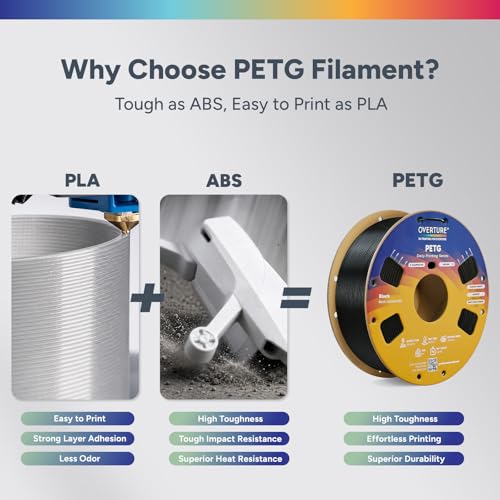
PETG is tougher than basic PLA, but it is not plug and play. This high-speed version still wants correct drying, a clean bed and tuned retraction, especially in black which can highlight stringing and blobs if your settings are damp or hot. The 300mm/s rating assumes a capable rapid printer with strong part cooling and a dialed profile, so owners with older bed slingers or stock profiles might need to print much slower for best strength. Plan on a calibration routine before you commit to large functional plates.
Storage demands are also real. Once opened, PETG absorbs moisture from garage air, which can undo the vacuum sealed advantage and bring back bubbles, weak layer bonds and rough top layers. A single 1kg spool is practical for brackets and small organizers, but if you are outfitting an entire wall you will cycle through spools and want consistent drying between color batches. Think of it as a workshop material that rewards dry storage and patience rather than a set and forget consumable.
Who Should Buy This
You are a strong match if you run a modern rapid printer in your garage and want durable functional parts without moving to more demanding materials. Weekend DIYers printing replacement latches, tool holders, battery mounts, small parts dividers and shop jigs will get the most from the tight tolerance, solid layer bonding and AMS friendly winding. It also suits garage print farms or side hustles that need repeatable black parts with consistent color and reliable overnight runs.
Who Should Skip It
If you only print decorative models on a basic PLA tuned mini printer with no heated bed control, this spool is not ideal for your setup. It is also not the right choice for sealed living spaces without ventilation where you prefer low odor PLA, or for ultra fine miniatures where you prioritize smooth overhangs over toughness. In those cases, skip this rapid PETG for now and use your storage budget on organizers like those in our DEWALT Tool Box vs CRAFTSMAN organizer comparison until your printer and workspace are ready.
Frequently Asked Questions
Is OVERTURE High Speed PETG good for Bambu Lab AMS in 2026?
Yes, the product description specifically calls out AMS compatibility with neat winding for smooth feeding and material switching. Owners commonly report reliable retraction and fewer snags when the spool is dry and correctly seated. You should still keep your AMS desiccant fresh and use the recommended 230 to 260 degree nozzle range for best results.
What nozzle, bed and speed settings should you start with?
Overture recommends a nozzle temp of 230 to 260 degrees Celsius, a bed temp of 65 to 70 degrees, and speeds from 30 to 300mm/s. Start near the middle of the temp range with slower speeds for load bearing parts, then increase pace after your first successful plates. A clean PEI sheet and proper first layer squish help a lot with PETG adhesion.
How should you store PETG in a humid garage workshop?
Keep unopened spools sealed until use and move opened spools to an airtight tote with desiccant, since garage humidity can quickly cause stringing and bubbles. Re-dry if you hear popping or see rough extrusion. To compare storage approaches and see our full picks for filament friendly organization, browse our 3D Printer Filament picks alongside dry box habits.




Write Your Review
No reviews yet. Be the first to share your experience!