

Quick Answer
If your power tool battery charging rack keeps falling, the most likely cause is that it is not anchored into wall studs or it is overloaded on one side. Remove everything from the rack, check that the mounting screws are hitting solid wood studs or proper masonry anchors, and reduce the weight before you remount it.
Why This Happens
Most charging racks fall because they are mounted only into drywall. Drywall alone cannot hold the combined weight of drills, batteries, and chargers, especially when you add the leverage of tools hanging off the front. Even heavy duty drywall anchors will slowly work loose under that constant load.
Overloading is another common cause. A rack designed for a few drills and batteries can be overloaded quickly if you add a full toolbox, extra batteries, or heavy corded tools to the top shelf. When weight is concentrated on one side or on the outer slots, it creates a twisting force that pulls the top screws out first.
Cord tension also pulls racks down over time. If the built in power strip cord is stretched tight to reach an outlet, or if charger cords are yanked when you remove a battery, that repeated tug loosens screws and anchors. You may notice the rack tilting forward slightly before it finally drops.
Finally, assembly hardware can loosen with vibration and daily use. Screws that connect the shelves to the side frames or the wall brackets can back out a little each time you lift tools on and off. Once one joint is loose, the whole unit wobbles and puts more stress on the wall anchors. For more ideas on heavy duty options that stay put, see best drill holder wall mounts for heavy totes.
Fixes to Try
- Unload the rack completely and inspect the wall. Look for enlarged screw holes, cracked drywall, or anchors that spin freely. If the holes are damaged, you will need to patch them or move the rack to a new location.
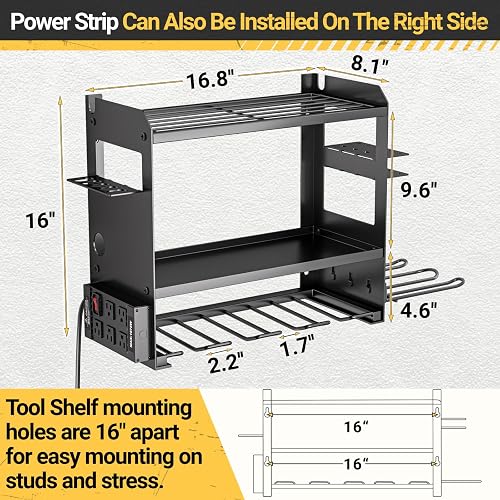
- Find the studs and re-anchor correctly. Use a stud finder to locate solid wood studs, ideally 16 inches apart, and drive the provided lag screws or wood screws directly into them. For concrete or block walls, switch to concrete sleeve anchors rated for the load and follow the anchor manufacturer’s instructions.
- Redistribute the weight evenly. Place heavier drills and batteries in the center slots and keep the top shelf for lighter chargers only. Avoid hanging everything on one side, and do not exceed the manufacturer’s recommended load for each shelf.
- Relieve power cord strain. Make sure the power strip cord has slack and is not pulling down on the rack, and secure the cord to the wall with clips so charger cords do not tug the shelf when you unplug batteries. Keep the strip switch accessible so you are not yanking the whole rack to turn it off.
- Tighten all assembly screws and check for bent parts. Snug every screw that holds the frame, shelves, and hooks together, and check that the wall brackets are flat against the wall with no gaps. If you mount on concrete, this guide can help: concrete wall tool storage.
When to Consider Replacing It
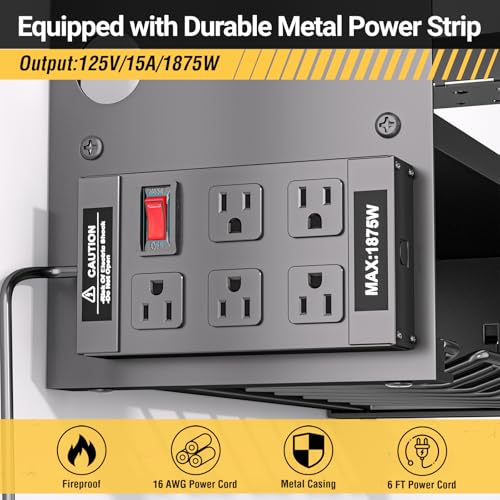
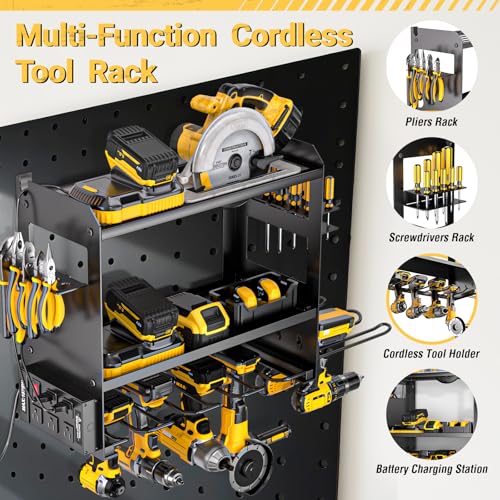
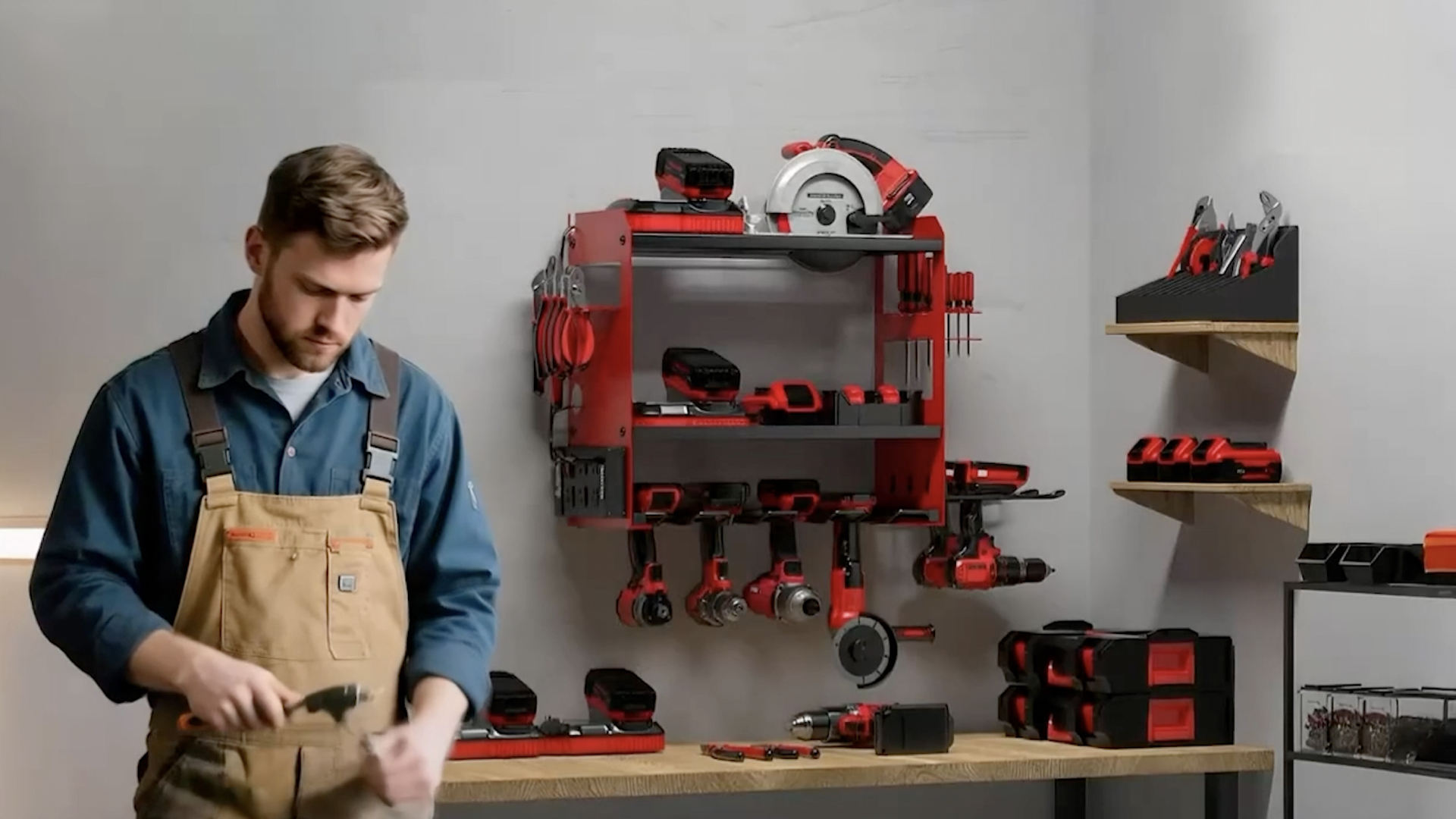
If the screw holes are stripped, the metal frame is bent or cracked, or the rack still sags after you have remounted it into studs with proper anchors, repair may not be worth the effort. A warped shelf or a power strip that feels loose or wobbly is also a sign the unit has been stressed beyond safe use. If you would rather replace it than keep troubleshooting, a wall mounted option with a built in metal power strip and stud spaced mounting holes can simplify the next install.
This article contains affiliate links. If you buy through one of our links, TheGarageCrafted may earn a commission at no extra cost to you. Commissions never influence which products we recommend or how we rank them. Read our Affiliate Disclosure for details.

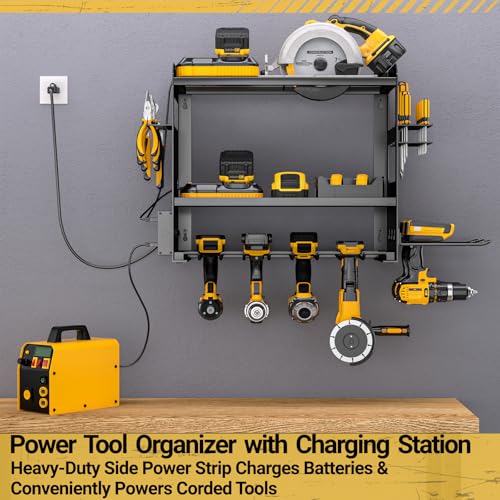
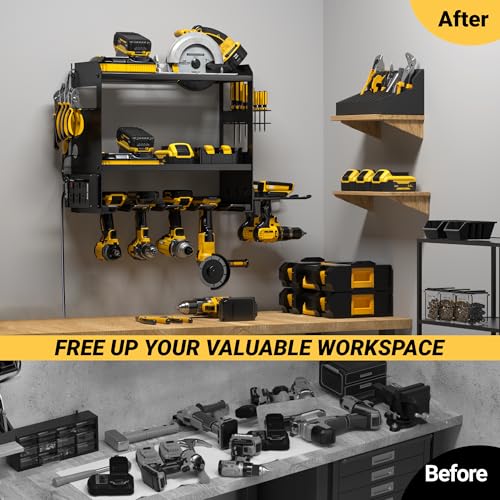
YYR Power Tool Organizer Wall Mount with Charging





As an Amazon Associate we earn from qualifying purchases. Product prices and availability are accurate as of the date/time indicated.
When you compare replacements, look for industrial grade steel construction, a powder coated finish for rust resistance, and mounting hardware designed to hit standard stud spacing. That combination helps distribute weight more evenly and reduces the chance of another fall.
When to Skip This and Call a Professional
This DIY troubleshooting is not ideal for situations involving electrical wiring, damaged outlets, or overhead mounting that supports very heavy loads. If the outlet behind the rack is warm, sparking, or the power strip shows signs of damage, skip this and contact a licensed electrician instead of trying to rewire or repair it yourself. For any wall mount, always follow the manufacturer’s weight capacity and anchoring instructions, and for ceiling or overhead storage, confirm you are anchored into joists as directed rather than improvising with drywall anchors.
You should also get help if the wall itself is crumbling, damp, or you are unsure what is behind it. A professional can verify stud locations, recommend the right anchors for your wall type, and ensure the install meets safety guidelines. You can also review how other systems are evaluated in wall control 30-WRK-400WB review to understand what a secure install should look like.
Frequently Asked Questions
Why does my power tool battery charging rack keep falling even with wall anchors?
Plastic drywall anchors often cannot hold the leveraged weight of drills hanging off the front of a rack. Try remounting directly into wood studs with the included wood screws, or use anchors specifically rated for your wall material and for the total loaded weight. Also check that the anchors are not installed in damaged or patched drywall.
Can I use drywall anchors instead of studs for a charging rack?
Standard plastic anchors are not recommended for a loaded charging rack, as they tend to loosen and pull out under constant weight and vibration. If you cannot hit a stud, use heavy duty toggle bolts or concrete anchors that are rated for your wall type, and keep the load lighter and centered. Whenever possible, at least the top mounting points should be in studs.
How do I stop the power cord from pulling my rack down?
Leave slack in the power strip cord so it does not hang tight between the rack and the outlet, and use adhesive cord clips to route the cord down the wall. Plug chargers in without stretching their cords, and avoid pulling batteries out at an angle that yanks the charger. A cord with a little extra length gives you more flexibility on placement.
Browse more picks in our Power Tool Wall Mount Organizers category, or see our related guide on Best Drill Holder Wall Mounts for Heavy Totes: 10 Sturdy Picks 2026.





Write Your Review
No reviews yet. Be the first to share your experience!